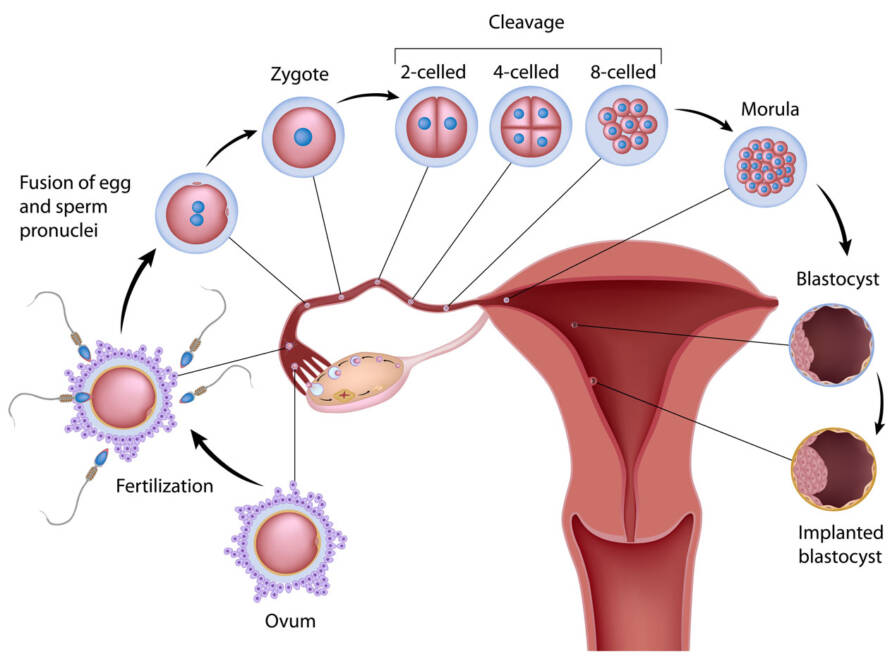
IVF and ICSI are often used interchangeably — but they’re not the same thing. If you’re researching fertility treatment, understanding the difference matters for setting realistic expectations and knowing what your doctor may recommend.
What Is IVF?
IVF (In Vitro Fertilization) involves placing retrieved eggs and prepared sperm together in a culture dish and allowing sperm to penetrate eggs naturally — without additional assistance.
Think of it as creating the right conditions for fertilization to happen on its own.
What Is ICSI?
ICSI (Intracytoplasmic Sperm Injection) takes a more direct approach. An embryologist uses a fine needle to inject a single sperm directly into each egg — bypassing the natural penetration process entirely.
IVF vs ICSI: Direct Comparison
| IVF | ICSI | |
|---|---|---|
| Fertilization | Sperm penetrates egg naturally | Single sperm injected directly |
| Sperm required | High quantity and quality | Just 1 per egg |
| Best suited for | Normal sperm parameters | Low count, poor motility, or previous IVF failure |
| Control over fertilization | Less | More |
| Current usage | Declining | ✅ Now the dominant standard |
Why ICSI Has Become the Standard
ICSI has largely replaced conventional IVF at most specialist clinics for several reasons:
1. Guaranteed fertilization attempt Rather than hoping sperm will penetrate eggs on their own, ICSI ensures every viable egg receives a direct fertilization attempt.
2. Works regardless of sperm quality Even with very low sperm count or poor motility, ICSI requires only one sperm per egg — making it the go-to option for male factor infertility.
3. Better outcomes in many cases Particularly for couples with sperm issues, ICSI consistently outperforms conventional IVF.
4. Required for PGT-A Genetic screening of embryos (PGT-A) is only possible with ICSI, since it allows precise embryo selection before transfer.
Who Should Choose IVF vs ICSI?
IVF may be appropriate for:
- Couples with normal sperm parameters across all measures
- No previous failed IVF/ICSI cycles
- Specific cases where the doctor determines it’s appropriate
ICSI is recommended for:
- Low sperm count (Oligospermia)
- Poor sperm motility (Asthenospermia)
- Abnormal sperm morphology (Teratospermia)
- No sperm in ejaculate (Azoospermia — used with TESE)
- Previous IVF fertilization failure
- Few eggs retrieved (to maximize every egg’s chance)
At GFC, ICSI is the standard approach — offering more consistent, predictable results across a wider range of patient profiles.
Success Rates at GFC
GFC’s ICSI success rate averages 60–65% per cycle, rising to 70–75% when combined with PGT-A genetic testing.
See full pricing → ICSI Packages 2026
FAQ
Does IVF or ICSI cost more?
At GFC, packages are primarily structured around ICSI. Contact GFC via Line @gfcclinic or call 097-484-5335 for specific pricing information.
How does a doctor decide which method to use?
Based on semen analysis results, age, medical history, and previous treatment outcomes. Both partners’ results inform the recommendation.
If IVF fails to fertilize, can we switch to ICSI?
Yes. Failed fertilization with conventional IVF is a common reason to switch to ICSI in subsequent cycles.
Are children born via ICSI healthy?
Decades of follow-up research show no significant health or developmental differences between children born via IVF, ICSI, or natural conception.
Does ICSI take longer than IVF?
The overall process takes roughly the same time. The difference is confined to the fertilization step in the laboratory.
Where can I consult about IVF/ICSI options?
Line @gfcclinic or call 097-484-5335. Available at all 3 GFC branches.
Summary
IVF and ICSI differ in how fertilization is achieved. IVF relies on sperm penetrating eggs naturally; ICSI injects a single sperm directly into each egg. ICSI is now the dominant standard because it gives more control, works for a wider range of patients, and produces more consistent results.
→ See ICSI treatment details → ICSI at GFC → See all packages → ICSI Pricing 2026 → Book a Free Consultation or Line @gfcclinic | Tel: 097-484-5335