Can I get pregnant 2-3 days after my period?
Yes, pregnancy is possible 2–3 days after your short period duration ends, although the chance is usually low for women with regular menstrual cycles. However, if you have a short menstrual cycle, ovulate early, or have unprotected sex, sperm can survive in the reproductive tract for up to five days, making pregnancy possible.
Why Pregnancy Is Possible Soon After Your Period
Many people believe pregnancy cannot happen immediately after menstruation. While the chance is often lower than during the fertile window, it is not impossible.
Pregnancy depends on three important factors:
1. When You Ovulate
Ovulation is the release of a mature egg from one of the ovaries. The egg survives for approximately 12–24 hours, during which fertilization can occur.
Although ovulation is commonly associated with the middle of a 28-day cycle, not every woman follows this pattern. Ovulation timing varies depending on:
- Menstrual cycle length
- Hormone levels
- Stress
- Illness
- Age
- Lifestyle factors
Women with shorter menstrual cycles may ovulate only a few days after their period ends.
2. How Long Sperm Can Survive
Sperm are much more resilient than many people realize.
Inside the female reproductive tract, healthy sperm may survive for up to five days under favorable conditions.
This means that if you have unprotected intercourse shortly after your period and ovulate within the next several days, sperm may still be alive when the egg is released.
3. Your Menstrual Cycle Length
Not every menstrual cycle lasts 28 days.
Cycle length varies considerably between women and even from month to month.
For example:
| Cycle Length | Approximate Ovulation |
|---|---|
| 21 days | Around Day 7 |
| 24 days | Around Day 10 |
| 28 days | Around Day 14 |
| 32 days | Around Day 18 |
Menstrual Cycle
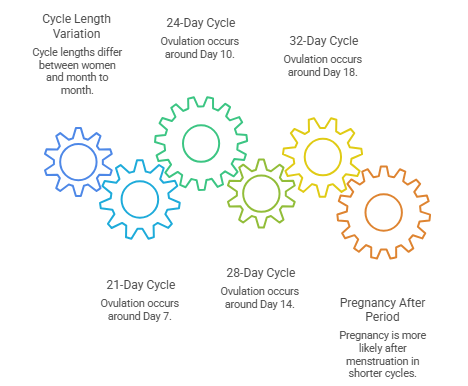
Someone with a 21-day cycle who has a five-day period may ovulate only a few days after menstruation ends, making pregnancy after the period much more likely than many expect.
Understanding Your Fertile Window
The fertile window is the period during which pregnancy is most likely to occur.
It includes:
- The five days before ovulation
- The day of ovulation
- Sometimes the day after ovulation
This means your fertile window lasts approximately six days.
Typical Fertility Timeline (28-Day Cycle)
| Cycle Day | What Happens | Pregnancy Chance |
|---|---|---|
| Days 1–5 | Menstrual period | Low |
| Days 6–9 | Egg developing | Low to moderate |
| Days 10–14 | Fertile window | Highest |
| Day 14 | Ovulation | Peak fertility |
| Days 15–28 | After ovulation | Low |
Remember that this timeline is only an example. Every woman’s cycle is unique, and ovulation may occur earlier or later than expected.
Does a 2–3 Day Period Mean Something Is Wrong?
Not necessarily.
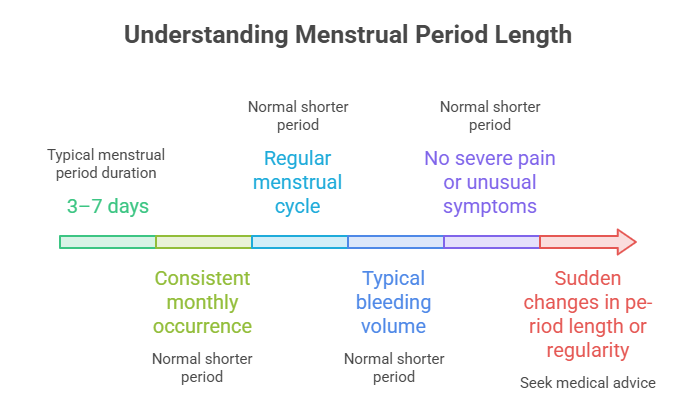
A healthy menstrual period typically lasts between three and seven days, but this range varies from person to person.
Some women naturally experience shorter periods throughout their reproductive years and have perfectly normal hormone levels, ovulation, and fertility.
A shorter period may be considered normal if:
- It occurs consistently every month.
- Your menstrual cycle remains regular.
- The bleeding volume is typical for you.
- You do not experience severe pain or unusual symptoms.
However, if your periods suddenly become much shorter or lighter than usual, or if you notice increasing irregularity, it may be worth discussing these changes with a healthcare professional.
Sudden menstrual changes can sometimes reflect hormonal fluctuations, lifestyle changes, or underlying medical conditions that affect ovulation or the uterine lining.
Causes of a Shorter or Lighter Period
Several factors can cause a reduction in both the duration and volume of your menstrual flow:
Thin Uterine Lining (Thin Endometrium): If the uterine lining does not thicken adequately in response to hormonal cycles, there is less tissue to shed, resulting in a lighter flow. This directly impacts an embryo’s ability to implant.
Hormonal Imbalances: Conditions like Polycystic Ovary Syndrome (PCOS) or thyroid disorders can disrupt regular ovulation.
Advancing Age: As women approach perimenopause, estrogen levels naturally decline, causing periods to become lighter and shorter.
Stress and Lack of Rest: High stress affects the hypothalamus—the part of the brain that regulates reproductive hormones—leading to irregular cycles.
Uterine Adhesions (Asherman’s Syndrome): Scar tissue inside the uterus, which can develop after a D&C (dilation and curettage) or pelvic inflammatory disease, reduces the surface area available to produce a menstrual bleed.
Can a Light or Short Period Affect Fertility?
A light period alone does not mean you are infertile.
Many women with lighter menstrual bleeding conceive naturally without any difficulty.
However, menstrual flow can provide useful clues about reproductive health.
In some cases, lighter bleeding may be associated with conditions that also affect fertility, including:
- Infrequent or absent ovulation
- Hormonal imbalances
- Changes in the uterine lining
- Thyroid disorders
- Polycystic ovary syndrome (PCOS)
- Scar tissue inside the uterus following certain surgical procedures
The key is identifying the underlying cause rather than focusing only on the number of days you bleed.
If you have been trying to conceive without success, a fertility evaluation may include hormone testing, pelvic ultrasound, and assessment of ovulation to better understand your reproductive health. In some cases, assisted reproductive treatment may be recommended. If you’re exploring your options, understanding the difference between IVF and ICSI can help you learn which fertilization method may be most appropriate based on your fertility diagnosis.
Frequently Ask Questions
My period is light but arrives on time every month. Can I still get pregnant naturally?
Yes, you can. If you are ovulating normally and your uterine lining is healthy enough for implantation, you can still achieve a successful pregnancy despite a lighter volume. However, getting a pelvic ultrasound around the time of ovulation to check the thickness of your lining is recommended for reassurance.
Could bleeding that lasts only 1–2 days actually be “implantation bleeding” instead of a period?
It is possible. Implantation bleeding typically appears as a light pinkish or brownish discharge and occurs around the time your period is expected, or slightly earlier. If you suspect this is the case, it is best to take a home pregnancy test 14 days after your last intercourse.
Will taking iron supplements increase my menstrual flow and make it easier to get pregnant?
Iron supplements help treat anemia (low red blood cells), but they do not directly balance hormones or thicken the uterine lining. If you want to regulate your period for pregnancy preparation, focus on a diet rich in protein and vitamin E, and consult a physician regarding specific prenatal vitamins that improve egg quality and lining health.
How is a thin uterine lining managed prior to undergoing ICSI?
During the ICSI process, physicians use estrogen medications to stimulate and build the uterine lining until it reaches an optimal thickness (usually around 8–10 millimeters) before transferring the embryo. Therefore, if a thin lining is detected beforehand, your care team will place extra emphasis on preparing the endometrium. If you’re considering fertility treatment, you can also explore our ICSI package to learn what’s included and what to expect throughout the treatment journey.
Can intensive, heavy exercise cause a lighter period?
Absolutely. Extreme exercise paired with excessively low body fat triggers the body to reduce estrogen production. This can lead to a very light period or cause it to stop entirely (amenorrhea). Exercise should be done in moderation to keep your body in a prime state for pregnancy.
Why Choose Genesis Fertility Center (GFC)?
Every fertility journey is unique, and choosing the right fertility clinic is an important step toward building your family. At Genesis Fertility Center (GFC), our experienced team of reproductive specialists provides personalized treatment plans using advanced Assisted Reproductive Technology (ART), including IVF/ICSI, Egg Freezing, Embryo Freezing, and PGT-A. We combine advanced laboratory technology with evidence-based treatment protocols to deliver care tailored to your individual fertility needs.
Our multidisciplinary team of obstetricians, gynecologists, fertility specialists, and embryologists is committed to providing compassionate care, clear communication, and transparent pricing throughout every stage of your fertility journey.
To learn more or schedule a consultation, please contact Genesis Fertility Center (GFC).
Call Center: 097-484-5335
Clinic Hours
- Monday – Friday: 9:00 AM–8:00 PM
- Saturday – Sunday: 8:00 AM–8:00 PM
Please Note: This article is for informational purposes only. Pregnancy outcomes and success rates vary based on individual health profiles. In accordance with professional medical ethics, appropriate individualized advice can only be provided after a thorough physical examination. If you notice any irregularities in your cycle, you are welcome to schedule a consultation with the GFC medical team immediately.