

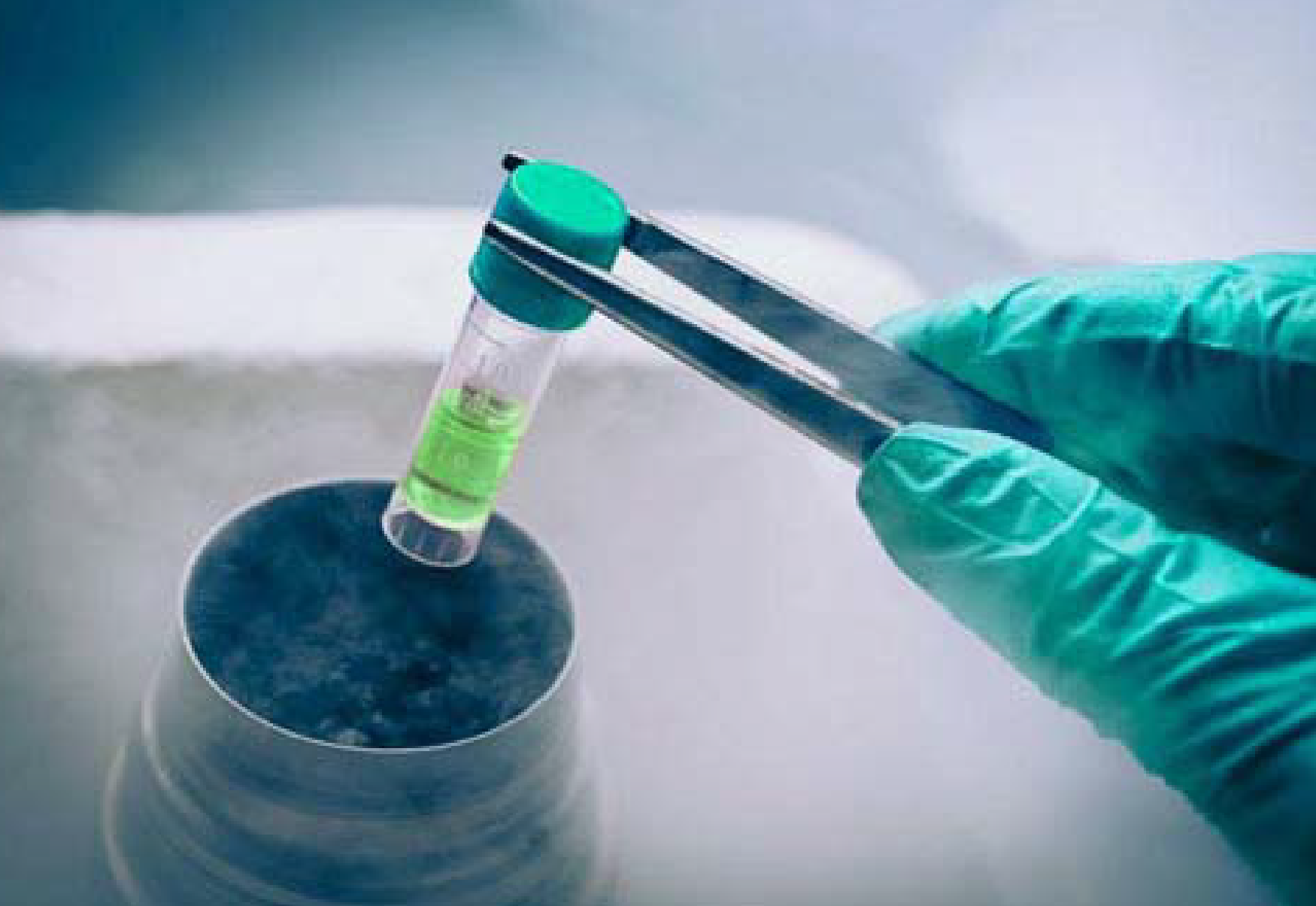
Frozen Embryo Transfer (FET) at Genesis Fertility Center
Frozen Embryo Transfer (FET) is an IVF procedure in which a previously frozen embryo is carefully thawed and transferred into the uterus during a prepared treatment cycle. At Genesis Fertility Center (GFC), FET is commonly recommended because it allows the uterus to recover after ovarian stimulation and may improve the chances of successful embryo implantation for suitable patients.
Book your free, no-obligation consultation or chat with our team on LINE (@gfcclinic) to discuss whether Frozen Embryo Transfer is the right option for you.
Reviewed by GFC Medical Team
Assoc. Prof. Dr. Pitak Laokirkkiat
Lead Reproductive Endocrinologist · Thai Medical Council License #18494 · 23 years’ experience.
Dr. Pitak oversees complex cases at Genesis Fertility Center and has reviewed the clinical information on this page.
Why Choose Frozen Embryo Transfer at GFC?
Choosing the right clinic is just as important as choosing the right treatment. Our guide on how to choose an FET clinic in Bangkok lists what to check.
Genesis Fertility Center (GFC) is one of Thailand’s leading fertility clinics and a SET-listed public company (Ticker: GFC). Our team of seven fertility specialists, led by Assoc. Prof. Dr. Pitak Laokirkkiat, provides personalized fertility care using advanced reproductive technologies.
Each year, we care for more than 2,000 patients, with an ICSI success rate of 60–65% per embryo transfer, increasing to 70–75% when PGT-A is used in appropriate cases. Our on-site embryology laboratory is equipped with AI-assisted embryo assessment (iDAScore), MACS sperm selection, and 24-hour PGT-A results to support individualized treatment planning. You can also explore our Patient Satisfaction Stories to learn about the experiences of individuals and couples who have received fertility treatment at Genesis Fertility Center.
For context on how fertility clinics report pregnancy, implantation, and live-birth outcomes, read IVF success rates in Thailand. Success figures should be compared only when the patient group, embryo type, outcome definition, and denominator are similar.
Whether you’re a local or international patient, our English-speaking coordinators help make your treatment journey as smooth as possible.
Fresh vs Frozen Embryo Transfer
| Fresh Embryo Transfer | Frozen Embryo Transfer (FET) |
|---|---|
| Embryo is transferred 3–5 days after fertilization. | Embryo is frozen, then transferred in a later treatment cycle. |
| Transfer occurs soon after ovarian stimulation. | Transfer is scheduled after the uterus has recovered. |
| May not be suitable if hormone levels are high. | Allows better preparation of the uterine lining. |
| Less flexibility in scheduling. | Greater flexibility for treatment planning. |
Our fertility specialists will recommend the most appropriate option based on your medical history, embryo quality, and treatment goals.
Who Is Suitable for Frozen Embryo Transfer?
FET tends to be recommended in specific situations rather than as a default choice for every patient. You may be a suitable candidate if you:
- Have frozen embryos from a previous IVF or ICSI cycle
- Are planning pregnancy after PGT-A testing
- Need time for your uterus to recover after ovarian stimulation
- Have experienced a previous unsuccessful fresh embryo transfer
- Prefer to delay pregnancy for medical or personal reasons
The first step is a personalised fertility counseling and treatment-planning consultation, where your specialist can review previous IVF cycles, embryo quality, uterine health, and the most appropriate timing for transfer.
Why Do Many Patients Choose FET?
Frequently Asked Questions
What is FET (Frozen Embryo Transfer)?
FET (Frozen Embryo Transfer) is the process of thawing a previously frozen embryo and transferring it into the uterus. It differs from a fresh embryo transfer, where the embryo is transferred immediately after fertilization within 3-6 days.
Is FET better than a fresh embryo transfer?
FET typically offers higher pregnancy success rates than fresh transfers because the body has had time to recover after ovarian stimulation. The uterine lining returns to a more natural state, making it more receptive to the embryo. FET also reduces the risk of Ovarian Hyperstimulation Syndrome (OHSS).
Who should choose FET over a fresh embryo transfer?
FET is recommended for patients at risk of OHSS, patients whose uterine lining is not ready after ovarian stimulation, patients who want PGT-A chromosome testing before transfer, or patients who need to choose the most suitable timing for pregnancy.
What is OHSS and how does FET help prevent it?
OHSS (Ovarian Hyperstimulation Syndrome) is a condition caused by excessive ovarian stimulation, leading to fluid accumulation, bloating, and in severe cases difficulty breathing or kidney problems. FET reduces this risk by delaying embryo transfer until the body has fully recovered from stimulation.
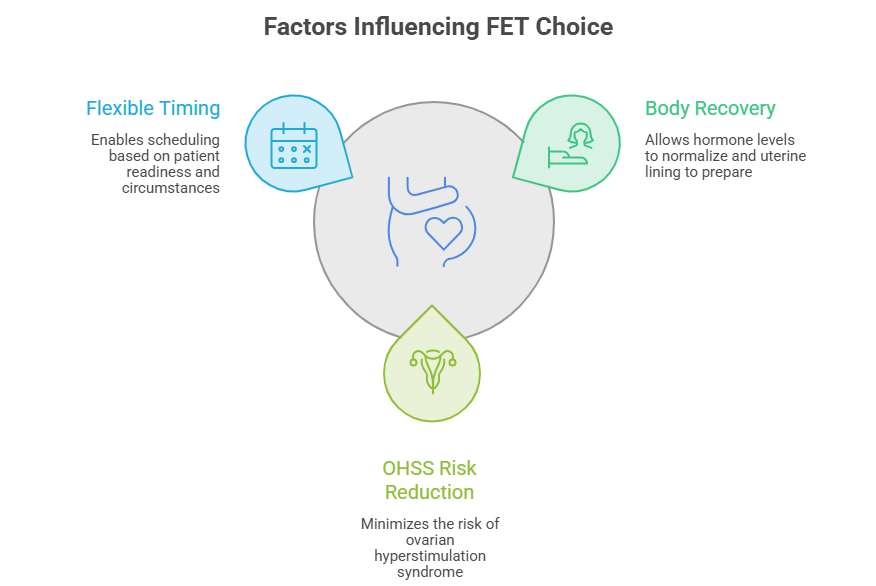
1. Allows the Body to Recover
After ovarian stimulation, hormone levels may remain elevated and the uterine lining may not be in its ideal condition for implantation.
At GFC, we often recommend allowing the body to recover before embryo transfer. Preparing the uterus in a separate treatment cycle may create a more favorable environment for implantation in suitable patients. Read more about why uterine-lining preparation is important for IVF success, including the factors your specialist may assess before transfer.
2. Reduces the Risk of OHSS
Women who respond strongly to fertility medications may be at risk of Ovarian Hyperstimulation Syndrome (OHSS).
By freezing embryos and postponing embryo transfer, our specialists can help reduce this risk while protecting future pregnancy opportunities.
3. Flexible Treatment Timing
FET allows embryo transfer to be scheduled when you are physically and emotionally ready. This flexibility is especially valuable for patients who:
- Need additional recovery time
- Are waiting for PGT-A results
- Have medical conditions requiring treatment first
- Are travelling from overseas
What to Expect During Embryo Transfer
Our FET process is carefully planned to support the best possible treatment experience.
- Prepare the uterus – Your fertility specialist monitors the uterine lining and prescribes medication when appropriate to prepare for embryo implantation.
- Embryo thawing – On the day of treatment, our embryologists carefully thaw your frozen embryo using internationally accepted laboratory protocols.
- Embryo transfer – The embryo is gently transferred into the uterus using a thin catheter. The procedure usually takes only a few minutes and does not require surgery or anesthesia.
- Pregnancy test – Approximately 10–14 days after embryo transfer, a blood test confirms whether implantation has occurred.
How Frozen Embryo Transfer Works at GFC
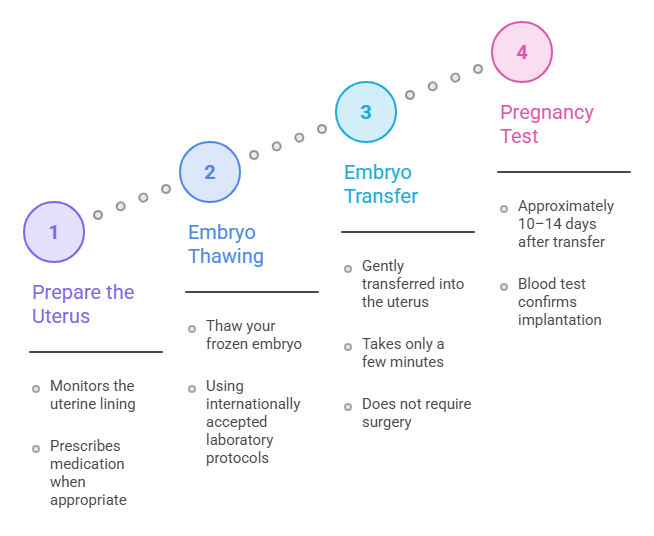
Our FET process is carefully planned to support the best possible treatment experience. Frozen embryos may have been created during an earlier IVF or ICSI treatment cycle in Bangkok, depending on the patient’s diagnosis and fertilization method.
Step 1 – Prepare the Uterus
Your fertility specialist monitors the uterine lining and prescribes medication when appropriate to prepare for embryo implantation.
Step 2 – Embryo Thawing
On the day of treatment, our embryologists carefully thaw your frozen embryo using internationally accepted laboratory protocols.
Step 3 – Embryo Transfer
The embryo is gently transferred into the uterus using a thin catheter. The procedure usually takes only a few minutes and does not require surgery.
Step 4 – Pregnancy Test
Approximately 10–14 days after embryo transfer, a blood test confirms whether implantation has occurred.
For additional information about the transfer procedure itself, see the guide to
embryo transfer in IVF and ICSI.
Advanced Embryology Laboratory
Successful embryo transfer depends on more than the procedure itself, it depends on what happens in the laboratory before the embryo is ever thawed.
At GFC, our embryology laboratory supports every stage of treatment with advanced reproductive technologies, including:
- AI-assisted embryo assessment (iDAScore) to support more objective embryo evaluation
- MACS sperm selection for improved sperm quality assessment
- Preimplantation Genetic Testing for Aneuploidy (PGT-A), with results typically available within 24 hours
- Vitrification (rapid-freeze) technique for embryo and egg freezing
These technologies are designed to support consistent embryo development and selection, helping our specialists identify the embryo with the best implantation potential for your transfer.
About Genesis Fertility Center

Genesis Fertility Clinic, also known as GFC, is a specialist fertility clinic based in Bangkok and led by a team of seven fertility specialists. We care for more than 2,000 patients each year, with an ICSI success rate of 60–65% per embryo transfer, increasing to 70–75% when PGT-A is used in appropriate cases.
With clinics in Rama 9, Rama III, and Ubon Ratchathani, we provide comprehensive fertility treatment for both Thai and international patients.
Book your free, no-obligation consultation today or contact us on LINE (@gfcclinic) to discuss your fertility treatment options.