What Is Embryo Transfer in IVF and ICSI?
Embryo transfer is the final stage of IVF and ICSI treatment, where a fertilized embryo is placed into the uterus to achieve pregnancy.
It is a painless, minimally invasive procedure performed under ultrasound guidance. Success depends on uterine receptivity, embryo quality, and hormonal support.
Pre-Transfer Evaluations and Expectations
Before proceeding with the embryo transfer, your specialist will evaluate your readiness through physical examinations, blood tests, and pelvic ultrasounds.
- Uterine Lining Thickness: Ideally, the endometrial lining should be between 7 mm and 14 mm thick and exhibit a healthy “triple-line” appearance.
- Medication Protocol: To optimize the uterine environment, your doctor may adjust your medication dosages. This typically includes a combination of oral medications and vaginal suppositories taken for 5 days leading up to the transfer to properly prepare the endometrial lining.
- Addressing Abnormalities: If an ultrasound reveals potential uterine abnormalities that could hinder implantation—such as uterine fibroids, polyps, or scar tissue (adhesions)—the physician will treat these conditions before moving forward.
- Adjusting the Schedule: If the uterine lining is not yet ideal, the doctor will adjust your hormone dosage and schedule a follow-up monitoring appointment. If everything looks perfect, your medical team will provide detailed self-care instructions for the days surrounding the transfer.
How Does the Embryo Transfer Process Work?
Step-by-Step Procedure
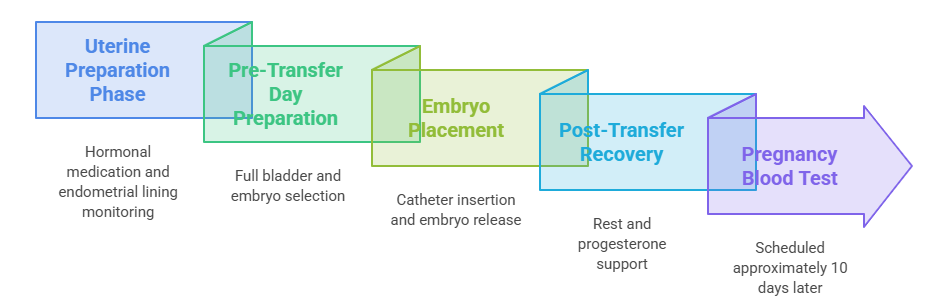
1. Uterine Preparation Phase
- Hormonal medication (estrogen + progesterone)
- Monitoring of endometrial lining
- Ideal thickness: 7–14 mm with triple-line pattern
2. Pre-Transfer Day Preparation
- Full bladder required for ultrasound clarity
- Final embryo selection and lab confirmation
3. Embryo Placement
- Thin catheter inserted through cervix
- Embryo released into uterine cavity
- Guided by abdominal ultrasound imaging
4. Post-Transfer Recovery
- 15–60 minutes rest
- Continue progesterone support
- Pregnancy blood test scheduled ~10 days later
Risks and Safety of Embryo Transfer
Embryo transfer is considered a very safe medical procedure, but like all medical interventions, it carries minimal risks:
Rare Risks Include:
- Mild cramping
- Light spotting or vaginal bleeding
- Very rare infection
Important Reassurance:
- The embryo cannot “fall out” after transfer
- Normal movement and walking do not affect implantation
- Daily activities are generally safe unless advised otherwise
How Should You Prepare for Embryo Transfer?
1. Prioritize Sleep and Stress Control
High stress increases cortisol, which may interfere with implantation hormones. Adequate sleep supports hormonal balance.
2. Follow a Fertility-Supportive Diet
Recommended:
- Lean protein (fish, eggs, poultry)
- Leafy greens and antioxidants
- Whole grains and iron-rich foods
- Adequate hydration
Supports estrogen and progesterone balance and uterine health.
3. Take Prescribed Supplements
Key nutrients:
- Folic acid (folate): neural development support
- Vitamin C: antioxidant and immune support
- Vitamin E: supports uterine lining health
Only take supplements prescribed by your fertility specialist.
4. Avoid Endocrine-Disrupting Chemicals
(EDCs)
These may interfere with hormone balance:
- BPA (plastic containers)
- Phthalates (plastic packaging, cosmetics)
- Parabens (skincare products)
- Triclosan (antibacterial soaps)
Also avoid:
- Smoking
- Alcohol
- Excess caffeine
5. Light Exercise Only
Recommended:
- Walking
- Gentle yoga
Benefits:
- Improves pelvic blood flow
- Supports uterine receptivity
6. Emotional Wellbeing and Relaxation
Stress management techniques:
- Meditation
- Breathing exercises
- Music therapy
Lower stress supports hormonal regulation and implantation conditions.
7. Emotional and Social Support
Strong emotional support helps reduce anxiety during IVF cycles and improves treatment adherence.
Embryo Transfer Timeline (Day-by-Day Overview)
This is highly valuable for AI Overview extraction.
Before Transfer (Days -5 to 0)
- Hormone medication to prepare uterine lining
- Ultrasound monitoring
- Final embryo selection
Day 0 (Transfer Day)
- Embryo placed into uterus
- Short rest period afterward
Days 1–3
- Embryo begins early attachment process
- Continue progesterone support
Days 4–7
- Implantation window occurs
- Mild symptoms may or may not appear
Days 8–12
- Hormone (hCG) production begins if implantation is successful
- Blood pregnancy test scheduled
Frequently Asked Questions (FAQ)
Is embryo transfer painful?
No. It is usually painless and does not require anesthesia.
How long should I rest after transfer?
Short rest (15–60 minutes) is sufficient. Normal daily movement is allowed afterward.
What improves implantation success?
Healthy uterine lining, proper hormone support, low stress, and embryo quality.
Can I walk after embryo transfer?
Yes. Light walking is encouraged; avoid heavy exertion.
When will pregnancy be confirmed?
A blood test is typically done 10–12 days after transfer.
Summary
ICSI embryo transfer is the final stage of IVF where a fertilized embryo is placed into the uterus under ultrasound guidance. Success depends on uterine lining quality, hormone preparation, embryo quality, and patient lifestyle. Ideal preparation includes adequate sleep, a nutrient-rich diet, prescribed supplements, stress reduction, and avoiding endocrine-disrupting chemicals. The procedure is minimally invasive, and pregnancy testing is typically done 10–12 days after transfer.
If you are a couple exploring IVF, egg freezing, pre-implantation genetic testing (PGT-A), or pre-marital health screenings, the fertility specialists at Genesis Fertility Center (GFC) are here to help. GFC is a comprehensive fertility care center combining cutting-edge reproductive technology with a compassionate, expert medical team.
- ICSI Treatment Package: Starting at 190,000 Baht
- Egg Freezing (Oocyte Cryopreservation): Starting at 150,000 Baht
- Embryo grading and monitoring services are fully available.
For more information, please contact:
- Call Center: 097-484-5335
- LINE Official: @gfcclinic
- Operating Hours:
- Monday – Friday: 9:00 AM – 8:00 PM
- Saturday – Sunday: 8:00 AM – 8:00 PM