Can You Get Pregnant with Uterine or Pelvic Adhesions?
Yes. Many women with uterine or pelvic adhesions can still become pregnant, either naturally or with fertility treatment such as IVF/ICSI. Pregnancy success depends on the location and severity of the adhesions and whether they interfere with ovulation, fertilization, embryo implantation, or the normal function of the uterus and fallopian tubes.
Pelvic adhesions surrounding the ovaries or fallopian tubes may prevent the egg and sperm from meeting naturally, while adhesions inside the uterus, known as Asherman syndrome or intrauterine adhesions can reduce the chance of successful embryo implantation and increase the risk of miscarriage. Fortunately, advances in minimally invasive surgery and assisted reproductive technology (ART) have significantly improved pregnancy outcomes for many women with these conditions.
What Are Uterine and Pelvic Adhesions?
Uterine and pelvic adhesions are bands of fibrous scar tissue that develop after inflammation, infection, surgery, or injury within the pelvis. These scar-like bands can cause organs that normally move freely, such as the uterus, ovaries, fallopian tubes, bladder, or bowel, to stick together.
Although the terms are often used interchangeably, uterine adhesions and pelvic adhesions are different conditions:
Uterine Adhesions (Intrauterine Adhesions)
Uterine adhesions develop inside the uterine cavity. Scar tissue may partially or completely fuse the walls of the uterus together, reducing the space available for embryo implantation. This condition is commonly known as Asherman syndrome.
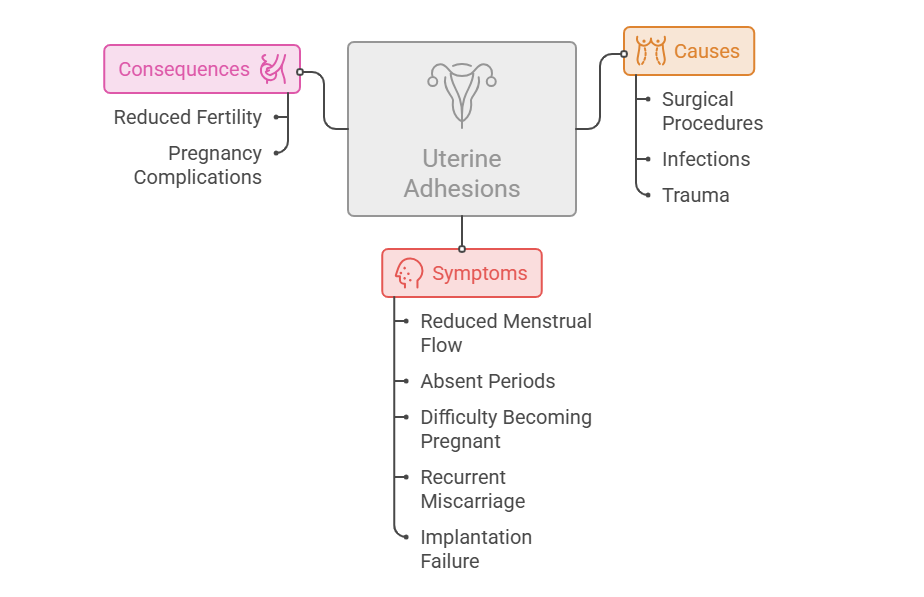
Women with intrauterine adhesions may experience:
- Reduced menstrual flow or absent periods
- Difficulty becoming pregnant
- Recurrent miscarriage
- Implantation failure after IVF
- Pregnancy complications in severe cases
Pelvic Adhesions
Pelvic adhesions form outside the uterus, usually around the ovaries, fallopian tubes, uterus, bowel, or bladder. They may distort the normal pelvic anatomy, restrict organ movement, or block the fallopian tubes, making natural conception more difficult.
Unlike intrauterine adhesions, pelvic adhesions do not always affect fertility. Their impact depends on their location and the degree of distortion they cause within the reproductive organs.
What Causes Uterine and Pelvic Adhesions?
Adhesions develop as part of the body’s natural healing process after tissue injury or inflammation. They’re one of several underlying causes of infertility GFC sees in practice. During healing, collagen fibers may form abnormal bands of scar tissue that connect nearby organs or tissues.
Common causes include:
1. Pelvic Inflammatory Disease (PID)
Pelvic inflammatory disease is one of the leading causes of pelvic adhesions. Bacterial infections, including sexually transmitted infections such as chlamydia and gonorrhea, can trigger severe inflammation that damages the fallopian tubes and surrounding tissues. As healing occurs, scar tissue may form, increasing the risk of infertility or chronic pelvic pain.
2. Previous Pelvic or Abdominal Surgery
Surgery is another common cause of adhesion formation. Procedures that may increase the risk include:
- Fibroid (myomectomy) surgery
- Ovarian cyst removal
- Caesarean section (C-section)
- Surgery for ectopic pregnancy
- Endometriosis surgery
- Appendectomy
- Other abdominal or pelvic operations
Although modern minimally invasive techniques such as laparoscopy reduce the risk, adhesions may still develop during the healing process.
3. Endometriosis
Endometriosis occurs when tissue similar to the uterine lining grows outside the uterus, commonly affecting the ovaries, fallopian tubes, pelvic lining, or bowel. Repeated bleeding and inflammation from these implants can lead to dense scar tissue and adhesions that distort the pelvic organs and reduce fertility.
Endometriosis is also associated with ovarian endometriomas (commonly called “chocolate cysts”), which may further affect ovarian function and egg quality.
4. Uterine Procedures
Certain procedures involving the uterine cavity may increase the risk of intrauterine adhesions, including:
- Dilation and curettage (D&C)
- Removal of retained pregnancy tissue
- Hysteroscopic surgery
- Treatment for postpartum bleeding
- Surgical management after miscarriage
The risk depends on the extent of tissue injury and the individual’s healing response.
5. Radiation or Severe Pelvic Infection
Less commonly, pelvic radiation therapy or severe uterine infections following childbirth or miscarriage may damage the endometrium and lead to intrauterine scar tissue.
What Are the Symptoms of Uterine and Pelvic Adhesions?
Symptoms vary considerably depending on the location, severity, and extent of the adhesions. Some women have no noticeable symptoms and only discover adhesions during fertility investigations.
Common symptoms include:
Chronic Pelvic Pain
Persistent or recurring pain in the lower abdomen or pelvis is one of the most common symptoms. The discomfort may worsen during menstruation, sexual intercourse, exercise, or prolonged standing.
Pain During Sexual Intercourse
Adhesions that restrict the movement of pelvic organs may cause deep pelvic pain during intercourse (dyspareunia).
Menstrual Changes
Women with intrauterine adhesions may experience:
- Lighter-than-normal periods
- Absent menstrual periods
- Irregular bleeding
- Spotting between cycles
These symptoms may occur when scar tissue partially blocks the uterine cavity or cervical canal.
Difficulty Becoming Pregnant
Some women are unable to conceive naturally because adhesions interfere with ovulation, fertilization, or embryo implantation. Others may experience repeated implantation failure during fertility treatment.
Recurrent Pregnancy Loss
Severe intrauterine adhesions may increase the risk of miscarriage by reducing the healthy endometrial surface needed for normal placental development.
Bladder or Bowel Symptoms
Dense pelvic adhesions may press against nearby organs, leading to:
- Frequent urination
- Constipation
- Painful bowel movements
- Abdominal bloating
These symptoms are more commonly seen in women with extensive pelvic adhesions or advanced endometriosis.
How Are Uterine and Pelvic Adhesions Diagnosed?
An accurate diagnosis is essential before deciding on the most appropriate fertility treatment. Because symptoms alone cannot determine the presence or severity of adhesions, fertility specialists use a combination of medical history, physical examination, imaging tests, and minimally invasive procedures.
Medical History and Pelvic Examination
Your fertility specialist will review your medical and reproductive history, including:
- Previous pelvic or abdominal surgeries
- Miscarriages or dilation and curettage (D&C) procedures
- Endometriosis
- Pelvic inflammatory disease (PID)
- Chronic pelvic pain
- Menstrual changes
- Previous fertility treatments
A pelvic examination may identify tenderness or other signs of pelvic disease, although adhesions themselves usually cannot be felt during a routine examination.
Transvaginal Ultrasound
A transvaginal ultrasound is commonly performed during an infertility evaluation. While it cannot directly detect most pelvic adhesions, it can identify conditions that are commonly associated with adhesion formation, including:
- Endometriomas (ovarian “chocolate cysts”)
- Hydrosalpinx (fluid-filled fallopian tubes)
- Uterine fibroids
- Ovarian cysts
- Abnormalities of the uterine lining
Hysterosalpingography (HSG)
A hysterosalpingogram (HSG) is an X-ray procedure in which contrast dye is injected into the uterus and fallopian tubes.
This test helps determine whether:
- The fallopian tubes are blocked
- The uterine cavity has an abnormal shape
- Intrauterine adhesions may be present
HSG is often one of the first investigations performed when evaluating female infertility.
Hysteroscopy
Hysteroscopy is considered the gold standard for diagnosing intrauterine adhesions (Asherman syndrome).
During the procedure, a thin camera is inserted through the cervix into the uterus, allowing the physician to directly examine the uterine cavity. If scar tissue is identified, it can often be removed during the same procedure.
Laparoscopy
Laparoscopy is the most accurate method for diagnosing pelvic adhesions outside the uterus.
Using a small camera inserted through tiny abdominal incisions, the surgeon can directly inspect the uterus, ovaries, fallopian tubes, and surrounding pelvic organs.
If significant adhesions are found, laparoscopic adhesiolysis (adhesion removal) may be performed during the same operation.
Is ICSI Better Than Conventional IVF for Women with Adhesions?
ICSI and conventional IVF address different fertility challenges.
ICSI involves injecting a single sperm directly into each mature egg and is primarily recommended for:
- Male factor infertility
- Previous fertilization failure
- Low sperm count
- Poor sperm motility
- Surgically retrieved sperm
Pelvic or uterine adhesions alone are not an indication for ICSI.
However, if a couple has both female fertility factors (such as adhesions) and male factor infertility, ICSI may be recommended as part of the IVF treatment plan.
The choice between IVF and ICSI should always be individualized based on both partners’ fertility evaluation.
When Is Surgery Recommended Before IVF?
Surgery is not necessary for every patient.
A fertility specialist may recommend removing adhesions before IVF if they:
- Distort the uterine cavity
- Prevent embryo implantation
- Cause hydrosalpinx (fluid-filled fallopian tubes)
- Obstruct egg retrieval
- Cause severe pelvic pain
- Affect ovarian access during treatment
In many cases, treating significant adhesions before IVF improves the chances of successful embryo implantation and a healthy pregnancy.
IVF vs. Surgery: Which Option Is Best?
| Clinical Situation | Recommended Approach |
|---|---|
| Mild pelvic adhesions with normal fertility | Observation or natural conception |
| Tubal blockage caused by adhesions | IVF is often recommended |
| Intrauterine adhesions (Asherman syndrome) | Hysteroscopic adhesiolysis before embryo transfer |
| Hydrosalpinx | Surgical treatment before IVF may improve outcomes |
| Severe endometriosis with adhesions | Individualized treatment based on age, ovarian reserve, symptoms, and fertility goals |
| Multiple infertility factors | Personalized treatment plan combining surgery and assisted reproductive technology when appropriate |
What Are the Chances of Getting Pregnant with Uterine or Pelvic Adhesions?
There is no single success rate that applies to every patient.
Pregnancy outcomes depend on several factors, including:
- Age
- Ovarian reserve
- Severity of adhesions
- Location of the scar tissue
- Underlying cause (such as endometriosis or pelvic inflammatory disease)
- Previous fertility history
- Overall reproductive health
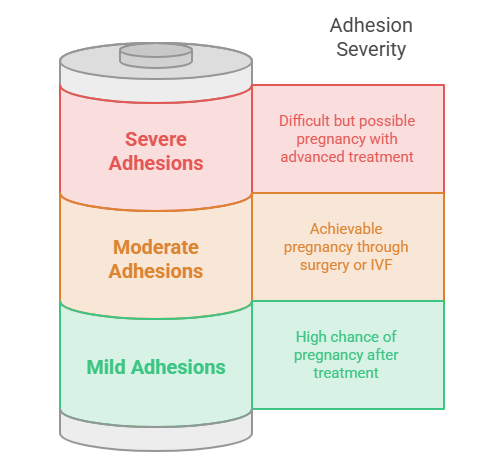
Women with mild adhesions often have good pregnancy outcomes after appropriate treatment.
Patients with moderate or severe adhesions may still achieve successful pregnancies through hysteroscopic surgery, laparoscopic treatment, IVF, or a combination of these approaches.
Early diagnosis and individualized treatment planning generally provide the best opportunity for a successful pregnancy.
Frequently Asked Questions
Can you get pregnant naturally with uterine adhesions?
Yes. Many women with mild adhesions conceive naturally. However, severe adhesions involving the fallopian tubes or uterine cavity may reduce fertility and require medical or surgical treatment.
Can IVF overcome blocked fallopian tubes caused by adhesions?
In many cases, yes. IVF bypasses the fallopian tubes because fertilization occurs in the laboratory before the embryo is transferred into the uterus.
Does ICSI treat uterine adhesions?
No. ICSI improves fertilization by injecting a single sperm directly into an egg. It does not remove scar tissue or treat uterine abnormalities.
Is surgery always necessary before IVF?
Not always. Surgery is generally recommended only when adhesions interfere with embryo implantation, distort the uterine cavity, cause hydrosalpinx, or significantly affect access to the ovaries during treatment.
Can pelvic adhesions cause miscarriage?
Pelvic adhesions outside the uterus do not usually cause miscarriage directly. However, severe intrauterine adhesions may increase miscarriage risk by affecting implantation and placental development.
What is Asherman syndrome?
Asherman syndrome is a condition in which scar tissue forms inside the uterine cavity. It may cause light or absent periods, infertility, recurrent miscarriage, or repeated implantation failure.
How long should I wait to try to become pregnant after adhesion surgery?
The recommended waiting period varies depending on the type of surgery and your recovery. Your fertility specialist will advise when it is safe to begin trying to conceive naturally or proceed with IVF.
Begin Your Fertility Journey with Genesis Fertility Center (GFC)
If you have been diagnosed with uterine adhesions, pelvic adhesions, endometriosis, or fallopian tube blockage and are planning to conceive, an early fertility assessment can help identify the most appropriate treatment options.
At Genesis Fertility Center (GFC), our fertility specialists provide comprehensive evaluations and individualized treatment plans tailored to each patient’s reproductive goals. Services include fertility testing, hysteroscopic evaluation, IVF, ICSI, egg freezing, embryo assessment, and other advanced assisted reproductive technologies. For couples weighing next steps, it’s worth reviewing ICSI treatment costs ahead of a consultation.
Whether you are trying to conceive naturally or considering fertility treatment, our team is committed to providing evidence-based care and compassionate support throughout your journey.
To schedule a consultation:
Call Center: 097-484-5335
LINE Official: @gfcclinic
Opening Hours
Monday – Friday: 9:00 AM – 8:00 PM
Saturday – Sunday: 8:00 AM – 8:00 PM
Medical information in this article is provided for educational purposes only and should not replace personalized advice, diagnosis, or treatment from a qualified healthcare professional. Individual treatment recommendations vary depending on each patient’s medical history and fertility evaluation.
Frequently Asked Questions
What causes pelvic adhesions, and how do they lead to blocked fallopian tubes and infertility?
Adhesions form from an abnormal tissue-repair process following inflammation. Common causes include endometriosis (chocolate cysts), pelvic infections, or a history of abdominal surgery. The adhesions are sticky, web-like bands of scar tissue that bind the uterus, ovaries, and fallopian tubes together, restricting their movement, distorting their shape, or blocking the tubes outright — preventing the tube's fimbria from capturing the egg after ovulation.
If severe adhesions are found, does laparoscopic surgery to remove them make it easier to conceive?
Laparoscopic adhesiolysis can help restore near-normal pelvic anatomy in cases where the adhesions are still relatively new. However, in cases of severe tubal damage or dense scar tissue, surgery itself can trigger new adhesion formation. Specialists therefore often recommend skipping surgery — to preserve healthy ovarian tissue — and proceeding directly to ICSI, retrieving eggs and fertilizing them outside the body, which is the most reliable way to bypass the adhesion problem entirely.