Why Is ICSI More Successful?
Intracytoplasmic Sperm Injection (ICSI) is an advanced fertility treatment performed during an IVF cycle. By injecting a single healthy sperm directly into a mature egg, ICSI helps overcome many causes of male-factor infertility and improves the chance of successful fertilization. However, achieving pregnancy depends on several factors, including maternal age, egg and sperm quality, embryo development, uterine health, and the expertise of the fertility team.
At Genesis Fertility Center (GFC), the clinical pregnancy success rate in ICSI is 60–65% per embryo transfer, increasing to 70–75% when combined with Preimplantation Genetic Testing for Aneuploidy (PGT-A) in appropriately selected patients. While every fertility journey is unique, personalized treatment planning and advanced embryology techniques play a significant role in improving outcomes.
This guide explains how ICSI works, who may benefit from treatment, what influences success rates, and why choosing an experienced fertility center can make a meaningful difference. For a broader overview of the treatment process, read the complete ICSI and IVF fertility treatment guide.
What Is ICSI?
Intracytoplasmic Sperm Injection (ICSI) is a specialized laboratory technique performed during an IVF cycle. Instead of allowing sperm to fertilize an egg naturally in a laboratory dish, an experienced embryologist carefully injects one selected sperm directly into a mature egg using a specialized microscope and micromanipulation equipment.
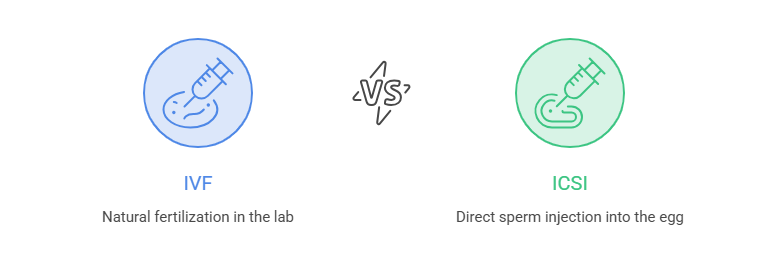
ICSI is one form of IVF treatment, but the fertilization process is different. In conventional IVF, sperm and eggs are placed together in the laboratory, while ICSI involves injecting one sperm directly into a mature egg. Read more about the difference between IVF and ICSI.
How Does ICSI Work?
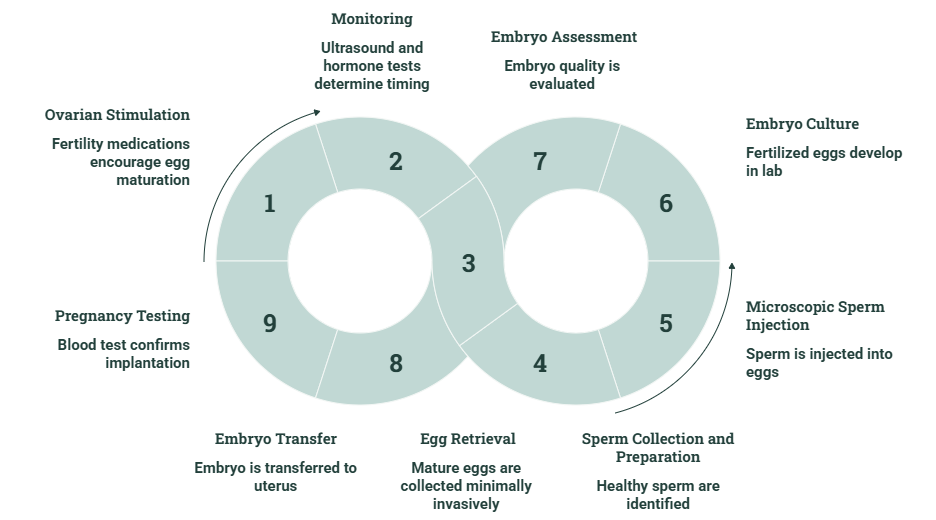
An ICSI treatment cycle generally includes the following steps:
- Ovarian stimulation – Fertility medications encourage multiple eggs to mature during a treatment cycle.
- Monitoring – Ultrasound scans and hormone testing help determine the optimal timing for egg retrieval.
- Egg retrieval – Mature eggs are collected using a minimally invasive procedure.
- Sperm collection and preparation – A semen sample is processed so embryologists can identify the healthiest sperm.
- Microscopic sperm injection – One sperm is injected directly into each mature egg.
- Embryo culture – Fertilized eggs develop under carefully controlled laboratory conditions.
- Embryo assessment – Embryologists evaluate embryo growth and quality before transfer or freezing.
- Embryo transfer – A selected embryo is transferred into the uterus.
- Pregnancy testing – Blood testing confirms whether implantation has occurred.
The timing and method of embryo transfer can vary depending on embryo development, uterine preparation, and whether a fresh or frozen transfer is recommended. Learn more about embryo transfer after ICSI.
Why Does ICSI Improve Fertilization?
ICSI increases fertilization by overcoming many of the challenges that prevent sperm from entering an egg naturally. The HFEA overview of ICSI explains who may be considered for the procedure, how it differs from IVF, and why ICSI’s benefit is primarily related to fertilization rather than automatically guaranteeing pregnancy.
This approach is particularly beneficial when sperm count is low, sperm movement is impaired, sperm shape is abnormal, or previous IVF cycles resulted in poor or failed fertilization.
For this reason, modern fertility care focuses on optimizing every stage of treatment rather than relying solely on the fertilization process.
Factors That Influence ICSI Success Rates
1. Female Age
Age remains one of the strongest predictors of treatment success. The ACOG explains how age affects fertility and egg quality, although individual outcomes can vary considerably.
Women under 35 generally have higher-quality eggs and a greater likelihood of producing chromosomally normal embryos. As maternal age increases, both egg quantity and quality gradually decline, reducing implantation and pregnancy rates.
Although many women over 35 and even over 40 achieve successful pregnancies through assisted reproductive technology, individualized treatment planning becomes increasingly important.
2. Egg Quality
Healthy eggs are essential for producing healthy embryos.
Egg quality is influenced by:
- maternal age
- ovarian reserve
- hormone balance
- underlying medical conditions
- lifestyle factors
Even with excellent laboratory techniques, poor egg quality may reduce embryo development.
3. Sperm Quality
Although ICSI requires only one sperm for each egg, selecting a healthy sperm remains essential.
Embryologists evaluate:
- sperm movement
- morphology
- maturity
- overall appearance
Careful sperm selection helps maximize fertilization potential while supporting healthy embryo development.
4. Embryo Quality
Embryos are monitored carefully during culture.
Specialists assess:
- cell division
- symmetry
- fragmentation
- developmental progress
High-quality embryos generally have a greater chance of implantation than embryos with poor developmental characteristics.
5. Uterine Health
Even an excellent embryo requires a receptive uterine environment.
Factors influencing implantation include:
- endometrial thickness
- uterine polyps
- fibroids
- adhesions
- inflammation
- hormonal balance
Conditions such as fibroids, polyps, inflammation, or adhesions may need to be assessed before embryo transfer. Patients diagnosed with scarring can learn more about pelvic adhesions and IVF/ICSI treatment.
6. Laboratory Standards
The embryology laboratory plays a critical role in every IVF and ICSI cycle.
Successful laboratories maintain strict control over:
- temperature
- humidity
- air quality
- culture media
- equipment calibration
- quality assurance procedures
Even minor environmental changes can influence embryo development.
7. Personalized Treatment
No two fertility journeys are identical.
Individualized treatment plans may include:
- customized ovarian stimulation protocols
- hormone monitoring
- timing adjustments
- embryo freezing strategies
- frozen embryo transfer when clinically appropriate
Personalization allows treatment to be adapted to each patient’s unique medical profile.
ICSI vs. Conventional IVF
| Feature | IVF | ICSI |
|---|---|---|
| Fertilization | Sperm fertilize the egg naturally in the laboratory | A single sperm is injected directly into the egg |
| Common indication | Many infertility causes | Often recommended for male-factor infertility or previous fertilization failure |
| Laboratory procedure | Less micromanipulation | Highly specialized micromanipulation technique |
| Goal | Achieve fertilization | Improve fertilization when natural penetration is difficult |
ICSI is not automatically better than IVF for every patient. Fertility specialists recommend the most appropriate technique based on medical history, diagnostic testing, and previous treatment outcomes.
Who May Benefit from ICSI?
ICSI may be recommended for couples experiencing:
- severe male-factor infertility
- low sperm count
- poor sperm motility
- abnormal sperm morphology
- previous IVF fertilization failure
- surgically retrieved sperm
- use of frozen eggs
- selected unexplained infertility cases
Women with certain reproductive conditions may also benefit when recommended by a reproductive medicine specialist following a comprehensive fertility evaluation.
Can Genetic Testing Improve Treatment Outcomes?
Some patients may be candidates for preimplantation genetic testing (PGT-A), which evaluates embryos for chromosomal abnormalities before transfer.
PGT-A may be considered for:
- advanced maternal age
- recurrent pregnancy loss
- repeated IVF or ICSI failure
- known chromosomal rearrangements in one or both partners
While PGT-A does not increase embryo quality, it may assist clinicians in selecting embryos with normal chromosome numbers when appropriate. PGT-A is different from testing or selecting embryos for non-medical sex-selection purposes. Availability, legality, and clinical indications vary by jurisdiction and patient circumstances. Read more about whether gender selection can be done through ICSI, and discuss the subject directly with a qualified fertility specialist.
Whether genetic testing is recommended depends on each patient’s clinical situation and should be discussed with a fertility specialist.
Lifestyle Factors That Can Influence Success
Medical treatment is only one part of fertility care.
Patients may improve overall reproductive health by:
- maintaining a healthy body weight
- avoiding smoking
- limiting alcohol intake
- managing chronic medical conditions
- prioritizing sleep
- reducing excessive stress
- following medical advice regarding medications and supplements
Although lifestyle changes cannot eliminate every cause of infertility, they may support treatment outcomes.
Why Experience and Teamwork Matter
Successful fertility treatment depends on collaboration among reproductive endocrinologists, embryologists, nurses, laboratory professionals, and patient coordinators. Patients comparing providers can also review this guide to choosing a fertility clinic in Bangkok and compare specialist experience, embryology-laboratory standards, communication, and treatment transparency.
An experienced multidisciplinary team helps ensure:
- accurate diagnosis
- individualized treatment planning
- careful laboratory procedures
- clear patient communication
- timely follow-up throughout each stage of treatment
This coordinated approach supports both patient confidence and clinical quality.
Frequently Asked Questions
Is ICSI more successful than IVF?
ICSI generally improves fertilization when sperm-related problems prevent natural fertilization during IVF. However, overall pregnancy success depends on many factors beyond fertilization.
Does ICSI guarantee pregnancy?
No. Although ICSI can improve fertilization rates, implantation, embryo quality, uterine health, and maternal factors all influence pregnancy outcomes.
Is ICSI recommended for every couple?
No. Many couples achieve excellent results with conventional IVF. Your fertility specialist will recommend the most appropriate treatment based on your individual diagnosis.
How long does an ICSI cycle take?
A complete treatment cycle typically takes several weeks, including ovarian stimulation, egg retrieval, laboratory procedures, embryo transfer, and pregnancy testing.
Does age affect ICSI success?
Yes. Maternal age is one of the strongest predictors of treatment outcomes because egg quality generally declines over time.
Why Choose Genesis Fertility Center (GFC)?

Every fertility journey is unique, and choosing the right fertility clinic is an important step toward building your family. At Genesis Fertility Center (GFC), our experienced team of reproductive specialists provides personalized treatment plans using advanced Assisted Reproductive Technology (ART), including IVF, ICSI, Egg Freezing, Embryo Freezing, and PGT-A. We combine advanced laboratory technology with treatment protocols to deliver care tailored to your individual fertility needs.
Our fertility team of obstetricians, gynecologists, fertility specialists, and embryologists is committed to providing compassionate care, clear communication, and transparent pricing throughout every stage of your fertility journey.
To learn more or schedule a consultation, please contact Genesis Fertility Center (GFC).
Call Center: 097-484-5335