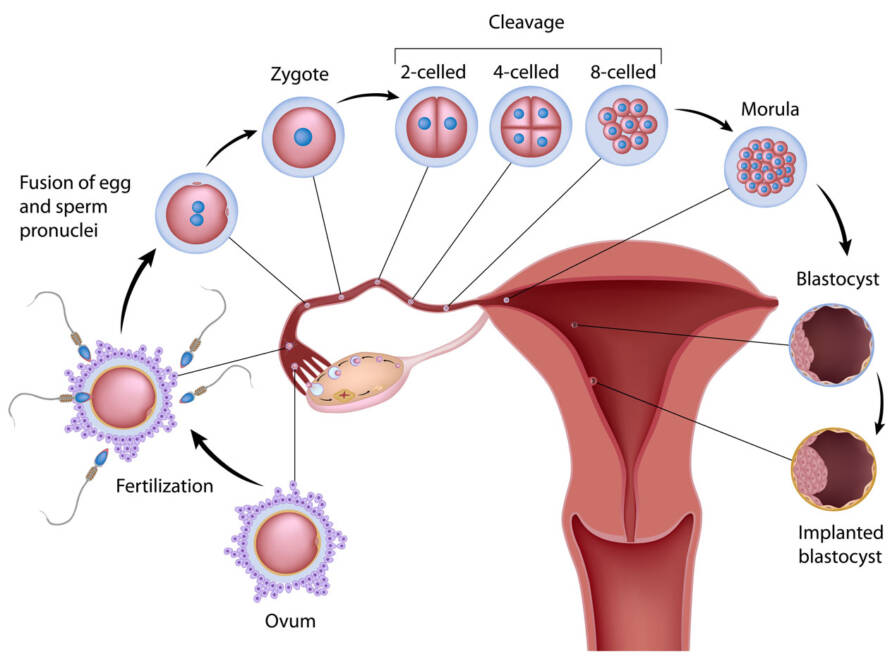
After the embryo transfer, patients should continue taking their prescribed medications and follow the doctor’s instructions carefully to support implantation and early pregnancy. This guidance applies to both conventional IVF and ICSI treatment cycles, and patients who are still learning about the differences between the two may benefit from reading our IVF vs ICSI guide to understand how fertilization methods differ while the post-transfer care remains largely the same.
Most fertility specialists recommend continuing light daily activities, eating a balanced diet, staying hydrated, getting enough sleep, and avoiding smoking, alcohol, and medications that have not been approved by your doctor. Complete bed rest is generally not recommended, as studies have not shown it to improve pregnancy outcomes.
At Genesis Fertility Center (GFC), we encourage every patient to follow a personalized aftercare plan. Below are nine practical guidelines that may help support your recovery after embryo transfer.
What Should You Do After an IVF or ICSI Embryo Transfer?
1. Stay Active, But Avoid Strenuous Physical Activity
Frequently Asked Questions
How long should I rest after an embryo transfer?
Full bed rest is not required. We recommend limiting strenuous activity for the first 3-5 days; you can walk and carry out light daily activities as usual.
Is it okay to have sex after an embryo transfer?
We recommend avoiding intercourse after the embryo transfer to reduce the risk to implantation. Please follow your doctor's specific guidance.
What can I eat after an embryo transfer?
Eat a well-balanced diet covering all food groups, with an emphasis on protein, vegetables, and fruit, and drink enough water. Avoid raw food, alcohol, and large amounts of caffeine.
Can I exercise after an embryo transfer?
Avoid strenuous exercise in the early period. Walking or other light activity is fine. Consult your doctor before starting any exercise.
How many days after the transfer can I take a pregnancy test?
Doctors typically schedule a blood pregnancy test around 10-14 days after the embryo transfer. We don't recommend testing yourself before that, as the result may be inaccurate.
Is light spotting normal after an embryo transfer?
Light spotting in the first 1-2 weeks can be a sign of implantation. However, tell your doctor immediately if bleeding is heavy or accompanied by severe abdominal pain.
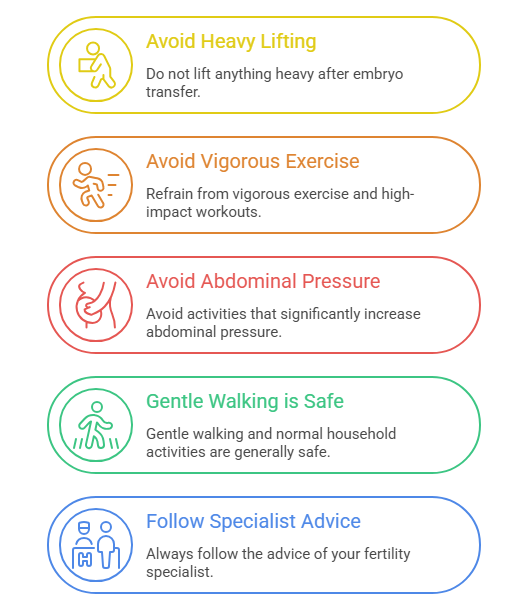
For the first few days after embryo transfer, avoid heavy lifting, vigorous exercise, high-impact workouts, or activities that significantly increase abdominal pressure. Gentle walking and normal household activities are generally considered safe unless your fertility specialist advises otherwise.
The goal is to avoid unnecessary physical strain while allowing your body to recover comfortably.
2. Avoid Complete Bed Rest
Although it may seem logical to stay in bed all day after embryo transfer, research has not shown that prolonged bed rest improves implantation rates.
Instead, maintain light daily activities, move around periodically, and avoid remaining in one position for extended periods. Gentle movement also helps reduce stiffness and supports healthy circulation.
3. Wait Before Resuming Sexual Intercourse
Many fertility specialists recommend avoiding sexual intercourse until after your pregnancy blood test or according to your clinic’s instructions.
Sexual activity may stimulate uterine contractions in some women, so following your doctor’s individualized recommendations is the safest approach.
4. Eat a Healthy, Balanced Diet
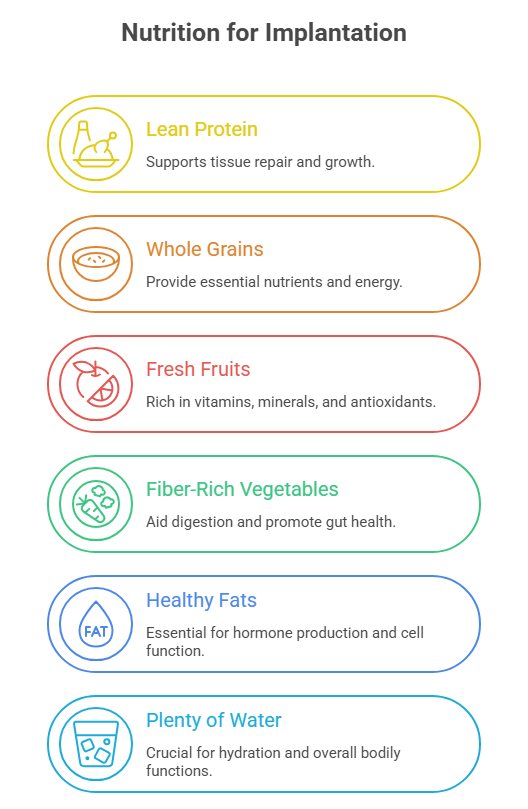
Good nutrition supports your overall health during the implantation period.
Choose foods such as:
- Lean protein
- Whole grains
- Fresh fruits
- Vegetables rich in fiber
- Healthy fats
- Plenty of water
To reduce the risk of foodborne illness, avoid raw or undercooked meat, seafood, and eggs. It’s also advisable to limit highly processed foods and continue taking prenatal vitamins or supplements prescribed by your fertility specialist.
If you experience constipation, increase your fiber intake and stay hydrated. If diarrhea or persistent digestive symptoms occur, contact your healthcare provider.
5. Get Enough Sleep and Rest
Quality sleep supports overall health and hormonal balance.
Aim for 7–9 hours of sleep each night and establish a consistent bedtime routine. Avoid staying up late whenever possible, and allow yourself time to rest if you feel fatigued after treatment.
6. Minimize Exposure to Harmful Chemicals
During the early stages of pregnancy, it’s sensible to reduce unnecessary exposure to potentially harmful chemicals.
When possible:
- Wear gloves when using household cleaners.
- Ensure good ventilation.
- Follow product safety instructions.
- Choose pregnancy-safe personal care products if recommended by your healthcare provider.
If you have questions about specific cosmetic or skincare products, consult your fertility specialist.
7. Take Only Medications Approved by Your Doctor
Do not start, stop, or change any medication without consulting your fertility specialist.
Even over-the-counter medications, herbal supplements, or traditional remedies may not be appropriate during early pregnancy or after embryo transfer.
If you develop symptoms such as fever, persistent cough, sore throat, or another illness, contact your clinic before taking medication.
8. Travel and Driving
Most patients can safely drive short distances after embryo transfer unless they are experiencing discomfort or have been advised otherwise.
If you are planning long-distance travel, discuss it with your fertility specialist. During extended trips, take regular breaks to stretch your legs, stay hydrated, and avoid sitting continuously for many hours.
9. Manage Stress and Prioritize Emotional Well-Being
The two-week wait after embryo transfer can be emotionally challenging.
Although stress has not been proven to directly prevent implantation, managing stress may improve your overall well-being during fertility treatment.
Helpful relaxation strategies include:
- Light walking
- Meditation
- Deep breathing exercises
- Reading
- Listening to music
- Spending time with supportive family and friends
If anxiety becomes overwhelming, don’t hesitate to seek support from your fertility team or a mental health professional.
Frequently Asked Questions After Embryo Transfer
Can I walk after embryo transfer?
Yes. Light walking and routine daily activities are generally considered safe. Avoid strenuous exercise or heavy lifting unless your fertility specialist advises otherwise.
Can I climb stairs?
Using stairs during normal daily activities is generally acceptable. However, avoid repeated heavy exertion or carrying heavy objects upstairs if your doctor has recommended activity restrictions.
Can I return to work?
Many patients return to office work within one or two days after embryo transfer. If your job involves heavy physical labor, discuss temporary work modifications with your fertility specialist.
Can I shower after embryo transfer?
Yes. Showering is safe. However, some doctors recommend avoiding hot tubs, saunas, or very hot baths during early pregnancy.
Can I drink coffee?
Moderate caffeine intake, generally no more than 200 mg per day, is commonly recommended during fertility treatment and early pregnancy. Follow your doctor’s advice based on your individual circumstances.
What symptoms are normal after embryo transfer?
Some patients experience:
- Mild cramping
- Light spotting
- Bloating
- Fatigue
- Breast tenderness
These symptoms can result from hormone medications and do not necessarily indicate whether implantation has occurred.
When should I contact my doctor?
Seek medical attention immediately if you experience:
- Heavy bleeding
- Severe abdominal pain
- Fever
- Difficulty breathing
- Severe swelling
- Symptoms of ovarian hyperstimulation syndrome (OHSS)
Always contact your fertility clinic if you are concerned about any symptoms after embryo transfer.
Quick Summary: IVF Embryo Transfer Aftercare Checklist
To support your recovery after embryo transfer:
- Take all prescribed medications exactly as instructed.
- Stay active with gentle daily movement.
- Avoid strenuous exercise and heavy lifting.
- Avoid strenuous exercise and heavy lifting.
- Eat a balanced, nutritious diet.
- Stay hydrated.
- Get enough sleep each night.
- Avoid smoking, alcohol, and recreational drugs.
- Consult your doctor before taking any medication.
- Manage stress with healthy relaxation techniques.
- Attend all scheduled follow-up appointments and pregnancy blood tests.
Personalized Fertility Care at Genesis Fertility Center
Every fertility journey is unique, and choosing the right fertility clinic is an important step toward building your family. At Genesis Fertility Center (GFC), our experienced team of reproductive specialists provides personalized treatment plans using advanced Assisted Reproductive Technology (ART), including IVF, ICSI, Egg Freezing, Embryo Freezing, and PGT-A. We combine advanced laboratory technology with evidence-based treatment protocols to deliver care tailored to your individual fertility needs.
Our multidisciplinary team of obstetricians, gynecologists, fertility specialists, and embryologists is committed to providing compassionate care, clear communication, and transparent pricing throughout every stage of your fertility journey.
To learn more or schedule a consultation, please contact Genesis Fertility Center (GFC).
Call Center: 097-484-5335
Clinic Hours
- Monday – Friday: 9:00 AM – 8:00 PM
- Saturday – Sunday: 8:00 AM – 8:00 PM