The main difference in identical vs fraternal twins is how they are conceived. Identical twins develop when one fertilized egg splits into two embryos, resulting in two individuals with nearly identical DNA. Fraternal twins develop when two separate eggs are fertilized by two different sperm cells during the same pregnancy, making them genetically similar to ordinary siblings.
Although both types of twins share the same womb and are born during the same pregnancy, they differ significantly in their genetic makeup, physical resemblance, and how they develop before birth. Understanding identical vs fraternal twins can help parents better appreciate how these twin pregnancies develop and why their characteristics can be so different.
What Are Identical Twins?
Identical twins, also known as monozygotic twins, develop from a single fertilized egg (zygote).
After one egg is fertilized by one sperm, the embryo splits into two separate embryos during the early stages of development. Because both twins originate from the same fertilized egg, they inherit nearly identical genetic material.
Key Characteristics of Identical Twins
- Formed from one egg and one sperm
- One fertilized egg divides into two embryos
- Share nearly 100% of their DNA
- Are almost always the same biological sex
- Usually have very similar facial features and physical characteristics
- May still develop subtle differences due to environmental influences and gene expression
What Are Fraternal Twins?
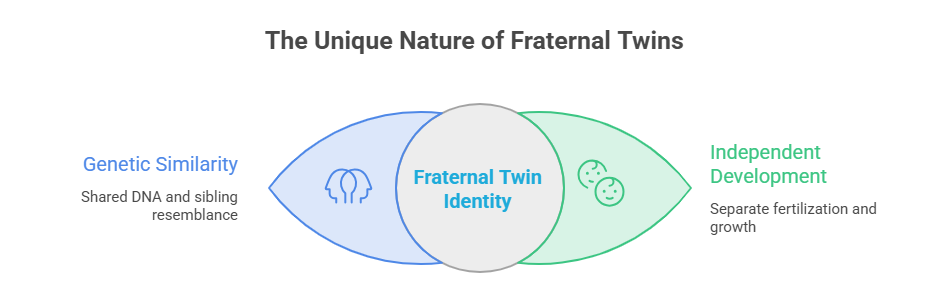
Fraternal twins, also known as dizygotic twins, develop from two separate eggs, each fertilized by a different sperm cell.
Each twin develops independently with its own unique genetic combination. As a result, fraternal twins are genetically comparable to other biological siblings.
Key Characteristics of Fraternal Twins
- Formed from two eggs and two sperm cells
- Develop from two separate fertilization events
- Share about 50% of their DNA, on average
- May be the same biological sex or different sexes
- May resemble each other closely or look completely different, just like other siblings
Identical Twins vs. Fraternal Twins: Comparison Table
| Feature | Identical Twins (Monozygotic) | Fraternal Twins (Dizygotic) |
| Number of eggs | One | Two |
| Number of sperm | One | Two |
| How they form | One fertilized egg splits into two embryos | Two separate eggs are fertilized independently |
| DNA shared | Nearly 100% | About 50% |
| Biological sex | Usually the same | Same or different |
| Physical appearance | Usually very similar | May look alike or completely different |
| Genetic relationship | Nearly genetically identical | Similar to ordinary siblings |
| Frequency | Less common | More common |
Which Type of Twins Is More Common?
Fraternal twins are more common than identical twins. Most naturally occurring twin pregnancies are fraternal because they result from the release and fertilization of two separate eggs during the same menstrual cycle.
Identical twins are less common and occur when a single fertilized egg splits into two embryos. Unlike fraternal twins, identical twinning appears to happen randomly and is generally not linked to family history.
What Causes Fraternal Twins?
Fraternal twins occur when a woman releases two eggs during the same ovulation cycle, and each egg is fertilized by a different sperm cell.
Several factors can increase the likelihood of fraternal twins, including:
- A family history of fraternal twins
- Maternal age, particularly after age 30
- Previous pregnancies
- Fertility treatments, such as in vitro fertilization (IVF) or ovulation-stimulating medications
- Naturally releasing multiple eggs during ovulation (hyperovulation)
Do Twins Run in Families?
Fraternal twins can run in families because some women inherit a tendency to release more than one egg during ovulation. This inherited trait can increase the chances of conceiving fraternal twins.
Identical twins, however, generally do not have a hereditary pattern and occur randomly in pregnancies around the world.
Why Don’t Identical Twins Always Look Exactly the Same?
Although identical twins share nearly all of their DNA, they are not exact copies in every way.
Environmental influences before and after birth, random developmental changes, and differences in gene expression can lead to small variations in appearance, fingerprints, personality, and even certain health conditions as they grow older.
Can Doctors Tell If Twins Are Identical Before Birth?
Doctors can often estimate whether twins are identical or fraternal during pregnancy using ultrasound.
For example, if twins share the same placenta, they are more likely to be identical. However, ultrasound cannot always determine twin type with complete certainty. After birth, DNA testing provides the most accurate way to confirm whether twins are identical or fraternal.
Frequently Asked Questions
Are identical twins genetically identical?
Yes. Identical twins share nearly all of their DNA because they develop from the same fertilized egg. Small genetic differences can arise over time due to mutations and environmental influences.
Can identical twins be different sexes?
In almost all cases, no. Because identical twins develop from the same fertilized egg, they almost always have the same biological sex. Boy-girl twins are typically fraternal. Rare genetic or chromosomal variations can result in unusual exceptions.
Can fraternal twins look identical?
Yes. Fraternal twins can sometimes look very similar, especially if they inherit many of the same physical traits from their parents. However, they share only about 50% of their DNA, making them genetically similar to ordinary siblings rather than genetically identical.
Can IVF or ICSI increase the chances of twins?
Fertility treatments may increase the chance of a twin pregnancy in certain situations, particularly when more than one embryo is transferred. Read our guide on twins for IVF / ICSI to learn how modern embryo transfer strategies influence this risk.
Can DNA testing confirm whether twins are identical?
Yes. DNA testing is the most reliable method for determining whether twins are identical or fraternal when there is any uncertainty.
Summary
Identical twins (monozygotic) originate from a single fertilized egg that splits into two embryos, resulting in nearly identical genetics and usually the same biological sex. Fraternal twins (dizygotic) develop from two separate eggs fertilized by two different sperm cells, share about 50% of their DNA, and are genetically similar to ordinary siblings.
While identical twins typically have very similar appearances, fraternal twins can resemble each other as much or as little as any other brothers or sisters. Understanding how each type of twin develops can help explain their genetic similarities, physical characteristics, and the factors that influence twin pregnancies.
Why Choose Genesis Fertility Center (GFC)?
Every fertility journey is unique, and choosing the right fertility clinic is an important step toward building your family. At Genesis Fertility Center (GFC), our experienced team of reproductive specialists provides personalized treatment plans using advanced Assisted Reproductive Technology (ART), including IVF, ICSI, Egg Freezing, Embryo Freezing, and PGT-A. We combine advanced laboratory technology with evidence-based treatment protocols to deliver care tailored to your individual fertility needs.
Our multidisciplinary team of obstetricians, gynecologists, fertility specialists, and embryologists is committed to providing compassionate care, clear communication, and transparent pricing throughout every stage of your fertility journey.
To learn more or schedule a consultation, please contact Genesis Fertility Center (GFC).
Call Center: 097-484-5335
Clinic Hours
- Monday – Friday: 9:00 AM – 8:00 PM
- Saturday – Sunday: 8:00 AM – 8:00 PM