
What does semen color mean?
Semen color can provide clues about a man’s reproductive and overall health. Healthy semen is usually white, off-white, or light gray with a jelly-like consistency. Temporary color changes may occur due to diet, dehydration, medications, or infrequent ejaculation. However, persistent yellow, green, red, brown, black, or clear semen may indicate infection, inflammation, bleeding, or fertility problems and should be evaluated by a healthcare professional.
Semen Color as a Sign of Infertility Risks
For many couples struggling to conceive, infertility is often not a female factor. It can result from a male factor, such as azoospermia (absence of sperm), abnormal sperm, or low sperm count.
Sperm cells are essential for reproduction. Semen is ejaculated through the male reproductive organ alongside seminal fluid. It is widely known that healthy semen is typically a thick white or light yellow fluid, consisting of sperm and secretions from various glands. However, changes in semen color can signal that the reproductive system is experiencing issues, serving as an indicator that a couple may face infertility.
Getting to Know Sperm Before Undergoing IVF
Male sperm consists of three main parts: the head (which contains the nucleus), the body (a long cylindrical middle piece), and the tail (used for motility/movement). Semen has a slightly alkaline pH of around 7.35–7.50.
Semen is a crucial component of the male reproductive system and is highly significant for those undergoing IVF or ICSI, where a single sperm is injected into an egg in a laboratory setting to create an embryo. Semen is a complex fluid containing more than just sperm. Studies show that healthy semen contains:
- Vitamins, enzymes, minerals, proteins, antioxidants, and sugars. These compounds support sperm development and protect them from environmental factors.
Semen can also change in appearance when mixed with other substances present in the reproductive tract or urethra, such as blood, pus, urine, or other fluids.
Can Semen Color Affect Fertility?
Semen color alone does not determine whether a man is fertile. While abnormal semen color can sometimes indicate infections, inflammation, bleeding, or underlying reproductive disorders that may affect sperm quality, many fertile men experience temporary color changes. Likewise, men with normal-looking semen may still have infertility caused by low sperm count, poor motility, or abnormal sperm morphology. A semen analysis remains the most reliable way to evaluate male fertility.
Checking Semen Color as a Health Indicator
Normally, ejaculated semen is a milky white or light yellow fluid with a consistency similar to raw egg whites or royal jelly. It also carries a distinct alkaline scent similar to bleach. These characteristics can vary slightly depending on genetics, diet, and overall health.
| Semen Color | Possible Meaning | Should You See a Doctor? |
|---|---|---|
| White / Off-white | Normal healthy semen | No |
| Light Gray | Usually normal | No |
| Clear | Low sperm concentration, frequent ejaculation | If persistent |
| Yellow | Urine mixing, vitamins, infection | If persistent |
| Green | Infection, STI | Yes |
| Pink | Fresh blood | Yes |
| Red | Blood in semen | Yes |
| Brown | Old blood | Yes |
| Orange | Blood mixed with seminal fluid | Yes |
| Black | Old bleeding, heavy metals (rare) | Yes |
Frequently Asked Questions
What color should normal semen be?
Normal semen is typically cloudy-white or slightly whitish-yellow in color. A color change that is persistent or unusual can be a sign of a condition that should be evaluated by a doctor.
What causes yellow or green semen?
It may be caused by a urinary tract infection, prostatitis, or white blood cells in the semen. See a doctor to determine the cause if the discoloration persists.
What causes pink, red, or brown semen?
This may indicate blood in the semen, which can result from infection, high blood pressure, or injury. If you notice these colors, see a doctor promptly to determine the cause.
Does abnormal semen color affect fertility?
It can, if the discoloration is caused by an infection or other health issue that affects semen quality. We recommend a health check-up and consulting a doctor if you're planning to conceive.
When should you see a doctor if you notice abnormal semen color?
See a doctor if the discoloration persists for more than 1-2 occasions, is accompanied by an unusual odor, or if you are planning to conceive.
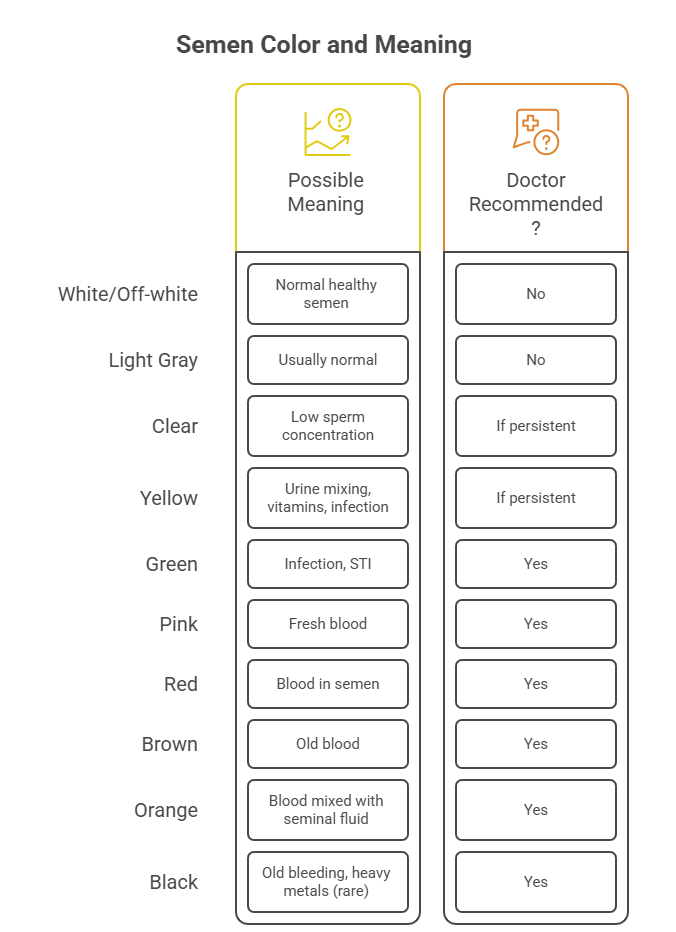
While minor variations in composition are normal, observing entirely different colors upon orgasm, such as brown, red, yellow, green, light gray, or completely clear, may signal semen abnormalities or potential infertility. Here is what different semen colors indicate about your health:
Yellow or Green Semen
Yellow color changes are the most common and often the least concerning. For a full breakdown of causes, from infrequent ejaculation to pyospermia, see this article on yellow semen. Below are the key causes:
- Urethral Blockage / Urine Retention: When semen travels through the urethra, it can mix with residual urine, turning the semen yellow. This is completely normal if you ejaculate shortly after urinating.
- Prostate Infection (Prostatitis): Yellow semen can be caused by a prostate infection, which occurs when bacteria from the urinary tract enter the prostate gland. Men trying to conceive should consult a doctor for treatment.
- Leukocytospermia (Excessive White Blood Cells): An abnormally high number of white blood cells can turn semen yellow. This can be caused by autoimmune conditions or viral infections and can be diagnosed via semen analysis at a fertility clinic.
Pink, Red, Brown, or Orange Semen
- Blood in Semen (Hematospermia): Pink or bright red semen usually indicates fresh blood, while brown or orange shades typically signify older blood that has oxidized over time.
- Infections and STDs: Conditions like chlamydia, gonorrhea, or prostatitis can cause bleeding. If you are planning to have a child, you should seek immediate medical evaluation.
- Other STD Symptoms: May include pain or a burning sensation during urination, testicular pain or swelling, and irritating or painful rashes.
- High Blood Pressure: Untreated hypertension can occasionally cause blood vessels to rupture, leading to blood appearing in the semen.
- Prostate or Testicular Cancer: In rare cases, bloody semen can be a symptom of prostate or testicular cancer.
Black or Dark Brown Semen
- Old Blood: Black or dark brown semen is usually caused by older red blood cells that have remained in the body for an extended period.
- Spinal Cord Injuries: This can result in dark brown or black semen due to malfunctions in the seminal vesicles (the glands responsible for producing components of seminal fluid).
- High Heavy Metal Levels: Elevated levels of heavy metals in the blood, such as lead, manganese, and nickel, can darken semen. This can result from exposure to contaminated food, water, or other environmental factors.
Factors That Influence Semen Color
Pre-marital health screenings are incredibly important for both women and men. A man’s semen color can fluctuate based on several factors, including diet, lifestyle choices, and overall physical health. Certain medications, such as antibiotics and chemotherapy drugs, can also alter semen color. Additionally, aging, high stress levels, and exposure to environmental toxins can impact both the color and overall quality of sperm.
How to Restore Normal Semen Color
Abnormal semen color can lead to fertility issues and should not be ignored. Future fathers can improve their sperm health through these simple lifestyle adjustments:
- Exercise Regularly: Engaging in moderate, consistent exercise increases antioxidant enzyme levels, making sperm stronger and highly viable.
- Eat a Sperm-Boosting Diet: Focus on foods rich in protein, vitamins A, B1, B2, D, E, calcium, amino acids, zinc, and iron, such as eggs, nuts, garlic, and bananas.
- Avoid Damaging Habits: Avoid behaviors that compromise sperm health, such as heavy alcohol consumption, smoking, wearing tight pants or underwear, and frequent hot tub soaking.
- Reduce Stress: High stress triggers the release of cortisol, which reduces sperm count and compromises sperm quality, making conception difficult.
When to See a Doctor
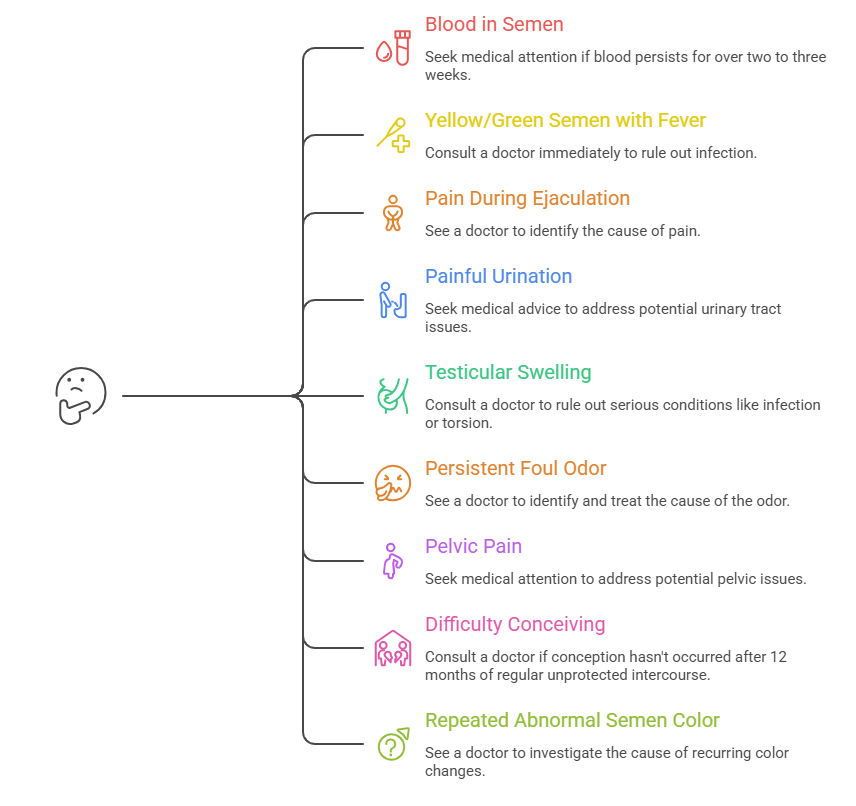
Seek medical attention if you experience:
- Blood in semen lasting longer than two to three weeks
- Yellow or green semen with fever
- Pain during ejaculation
- Painful urination
- Testicular swelling
- Persistent foul odor
- Pelvic pain
- Difficulty conceiving after 12 months of regular unprotected intercourse
- Repeated abnormal semen color
Aside from color, changes in semen texture can also point to health issues. While a temporarily thicker consistency can occur due to mild dehydration, diet, alcohol intake, or medication, persistent changes should not be ignored. If texture changes are prolonged and accompanied by foul odor or blood, you should consult a specialist or visit a fertility clinic, especially if you are planning treatments like IVF, ICSI, IUI, or GIFT.
How Is Abnormal Semen Color Diagnosed?
A fertility specialist may recommend:
- Semen analysis
- Urinalysis
- STI testing
- Prostate examination
- Hormone testing
- Ultrasound imaging
- Blood tests
These tests help identify infection, inflammation, bleeding disorders, or fertility problems that may require treatment.
Conclusion
Semen color is a vital indicator of male reproductive health, reflecting the quality and quantity of sperm production in the testes. Normal semen color is directly linked to the production of healthy sperm necessary for successful fertilization and a healthy pregnancy. Therefore, men should monitor their semen color regularly and consult a healthcare professional if they notice any persistent abnormalities.
FAQ
Can semen color change every day?
Yes. Hydration, ejaculation frequency, diet, medications, and temporary infections can all influence semen color.
Can yellow semen still contain healthy sperm?
Yes. Yellow semen is often harmless and may simply result from residual urine or vitamin supplements. However, persistent yellow semen with pain or odor should be evaluated.
Does blood in semen always mean cancer?
No. Most cases of blood in semen are caused by infections or inflammation rather than cancer. However, persistent or recurrent bloody semen should always be examined by a doctor.
Can lifestyle improve semen quality?
Yes. Maintaining a healthy weight, exercising regularly, eating antioxidant-rich foods, avoiding smoking, limiting alcohol, and managing stress can improve sperm health.
Can normal-looking semen still be infertile?
Yes. Semen appearance cannot accurately predict fertility. Only a laboratory semen analysis can measure sperm count, motility, and morphology.
This last question is especially valuable because it directly addresses a misconception and reinforces the importance of medical evaluation.
Plan Your Fertility Journey with GFC
If you are a couple considering IVF or preparing for ICSI/IVF in Thailand, Genesis Fertility Center (GFC) is a comprehensive fertility center equipped with advanced reproductive technologies and innovations.
Combining the expertise and dedicated care of our medical teams, we offer complete fertility solutions:
- ICSI Treatment: Starting at 190,000 Baht
- Egg Freezing: Starting at 150,000 Baht
- Semen Analysis Services
For more information, please contact:
- Call Center: 097-484-5335
- Operating Hours:
- Monday – Friday: 9:00 AM – 8:00 PM
- Saturday – Sunday: 8:00 AM – 8:00 PM