Choosing a male fertility clinic in Bangkok should involve more than booking a semen analysis.
Male fertility problems can involve sperm production, sperm quality, hormones, the reproductive tract, testicular function, or conditions such as varicocele. A basic sperm count may identify a problem, but it may not explain why the problem exists.
The right clinic should therefore do more than give you a laboratory report.
It should have specialists who can interpret the results, investigate the underlying cause when necessary, and explain which treatment options are actually appropriate.
If you are comparing male fertility clinics in Bangkok, these are the factors worth checking. The first step is to book a fertility consultation where a specialist can review your history, examine your results, and help you understand what should happen next.
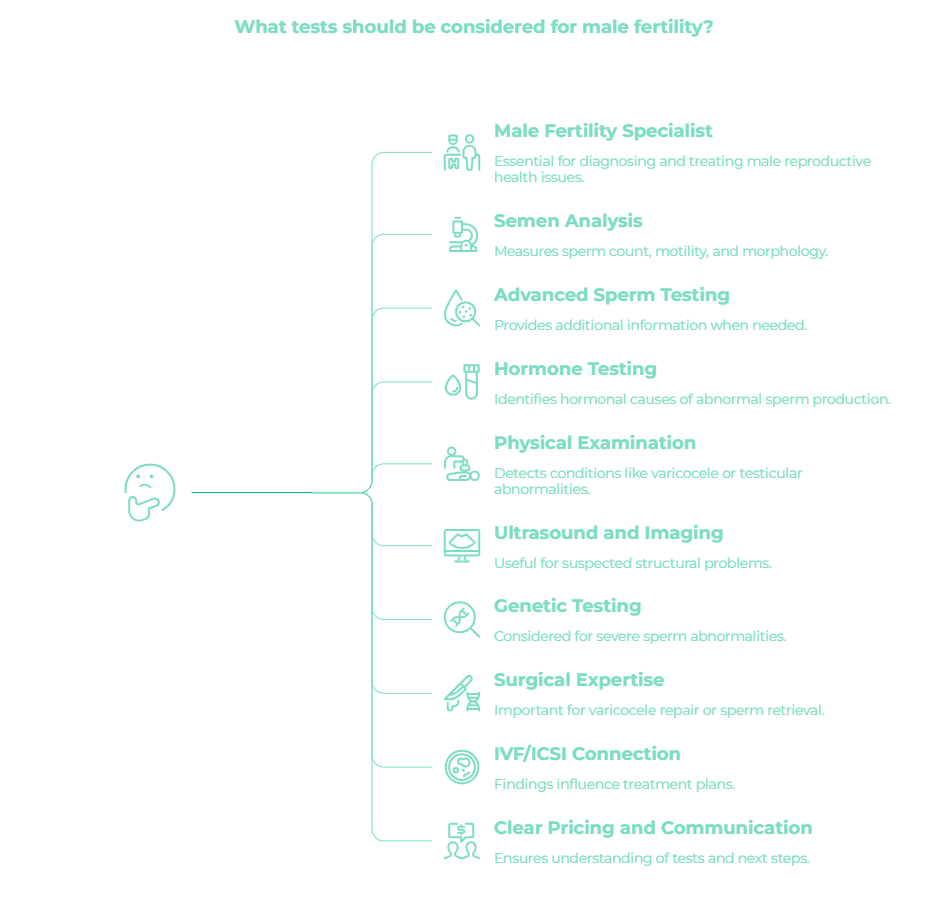
Male Fertility Clinic in Bangkok Checklist
| What to Check | Why It Matters |
|---|---|
| Male fertility specialist | A urologist or andrologist can investigate conditions affecting male reproductive health |
| Semen analysis | Measures sperm concentration, motility and morphology |
| Advanced sperm testing | May provide additional information when clinically indicated |
| Hormone testing/td> | Helps identify hormonal causes of abnormal sperm production |
| Physical examination | Can identify conditions such as varicocele or testicular abnormalities |
| Ultrasound and imaging | May be useful when structural problems are suspected |
| Genetic testing | Can be considered in certain cases of severe sperm abnormalities |
| Surgical expertise | Important if varicocele repair or surgical sperm retrieval may be required |
| Connection with IVF/ICSI | Male fertility findings should directly influence the couple's treatment plan |
| Clear pricing and communication | Helps you understand what is being tested and what happens next |
The best clinic is not necessarily the one offering the most sperm tests.
1. Does the Clinic Have a Specialist in Male Reproductive Medicine?
Start with the doctor.
Male fertility is not simply a laboratory problem. Some conditions require medical or surgical evaluation, particularly when semen results are repeatedly abnormal.
Depending on your situation, you may need assessment by a urologist, andrologist, or fertility specialist with experience in male reproductive medicine. The AUA/ASRM guidelines on male infertility provide evidence-based recommendations for evaluating and managing male reproductive conditions.
Ask:
- Who will review my fertility results?
- Does the doctor specialize in male reproductive health?
- Can the clinic investigate both medical and surgical causes?
- What happens if my semen analysis is abnormal?
- Can the clinic coordinate treatment with my partner’s fertility specialist?
A proper assessment should consider your medical history, reproductive history, medications, lifestyle, previous fertility treatment and physical findings, not just the latest semen analysis. For more information about male fertility problems, see the guide to male infertility causes and treatment.
A specialist should be able to explain what your results mean and what should happen next. Patients who are unsure which treatment or testing is appropriate can begin with fertility counseling and treatment planning. A consultation can help review age, ovarian reserve, treatment history, and personal fertility goals.
2. Does the Clinic Perform a Proper Semen Analysis?
A semen analysis is usually one of the first investigations in a male fertility assessment.
It can measure:
- Sperm concentration
- Total sperm count
- Sperm motility
- Sperm morphology
- Semen volume
- Other laboratory parameters
But one semen analysis does not always tell the whole story. For patients who notice unusual semen color, see the guide to yellow semen color meaning, which explains when color changes may warrant further evaluation.
Sperm production can vary between samples, which is why a specialist may recommend repeat testing when results are abnormal.
Some Bangkok fertility laboratories also use computer-assisted semen analysis (CASA) to provide standardized measurements of sperm parameters.
3. Does the Clinic Look Beyond the Sperm Count?
A normal sperm count does not automatically mean everything is normal.
Likewise, a low sperm count does not tell you by itself why conception has been difficult.
Depending on the findings, a specialist may investigate:
- Sperm motility
- Sperm morphology
- Hormonal function
- Testicular function
- Varicocele
- Reproductive tract obstruction
- Previous infection or injury
- Medication effects
- Genetic factors
Advanced tests such as sperm DNA fragmentation testing may also be considered in selected cases. In cases of severe sperm abnormalities, genetic testing of embryos may be considered. Learn more about PGT-A genetic testing by NGS, including what the test evaluates and when it may be appropriate.
4. Does the Clinic Check for Hormonal Causes?
Sperm production is controlled by a complex hormonal system.
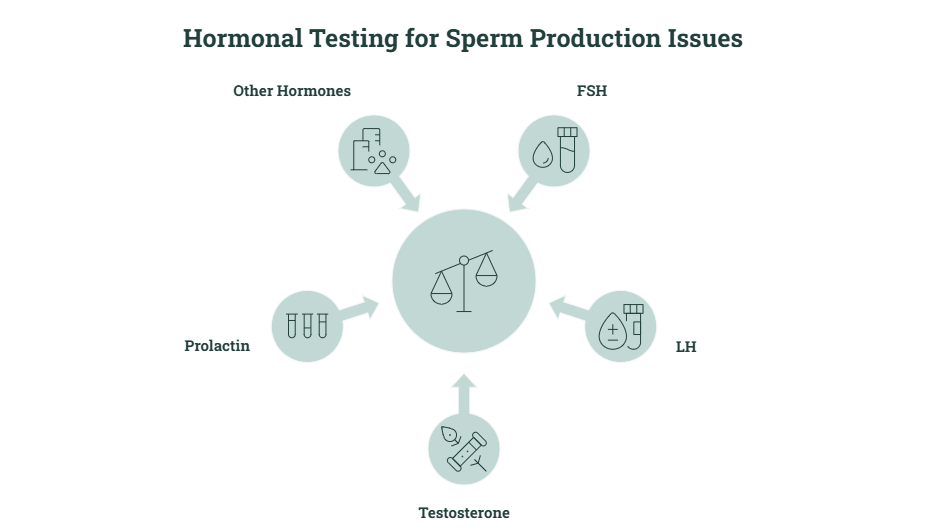
When sperm production is significantly reduced, hormone testing can sometimes help determine whether the problem is related to the hormonal signals controlling the testes.
Depending on the clinical situation, testing may include:
- FSH
- LH
- Testosterone
- Prolactin
- Other hormones when appropriate
The NICE guidance on fertility problems provides recommendations on hormone testing and other investigations for fertility assessment.
Related Services at GFC
- Fertility Consultation for Both Partners: assess fertility in both partners and plan treatment
- Egg Freezing: preserve healthy eggs for future pregnancy through vitrification and secure storage
- IVF/ICSI: an overview of the steps, timeline and costs
Available at 3 branches: GFC Rama 9 · GFC Rama 3 · GFC Ubon Ratchathani, or book online.
5. Can the Clinic Identify Varicocele and Other Structural Problems?
Some male fertility problems are related to physical conditions affecting the reproductive system.
One example is varicocele, an enlargement of the veins around the testicle.
A specialist may identify a varicocele during a physical examination. If further evaluation is needed, scrotal ultrasound may be used.
The important point is that an abnormal semen analysis should not always lead directly to IVF or ICSI.
Some causes of male infertility may be treatable.
6. Does the Clinic Have Access to Advanced Sperm Testing?
Advanced testing can sometimes provide information that a standard semen analysis cannot.
One example is sperm DNA fragmentation testing, which assesses DNA damage within sperm.
It may be considered in selected situations, such as certain cases of unexplained infertility or previous unsuccessful fertility treatment.
But it should not automatically be treated as the next step for every man.
Ask:
- Why do you recommend this test for me?
- What will the result tell us?
- Could the result change my treatment?
- What happens if the result is abnormal?
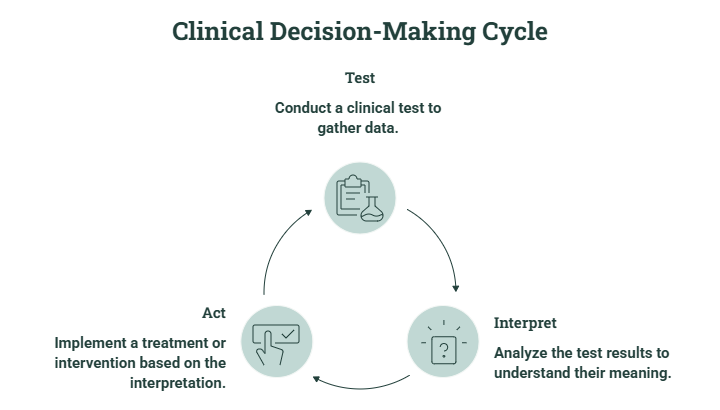
This is the approach to look for:
Test → interpret → act.
Not:
Test → add another test → add another treatment.
A clinic should be able to explain the clinical reason behind an advanced test before you pay for it.
7. Does the Clinic Understand When ICSI Is Appropriate?
Male fertility assessment should connect directly to the couple’s overall fertility plan.
When sperm quality or quantity is significantly impaired, ICSI (intracytoplasmic sperm injection) may be considered because an embryologist injects a selected sperm directly into an egg.
GFC describes ICSI as particularly relevant to male-factor infertility, previous fertilization failure and selected cases involving genetic testing. For a detailed explanation of the differences between conventional IVF and ICSI, see the IVF and ICSI treatment in Bangkok page.
But ICSI should not be presented as a solution to every male fertility problem. For context on how GFC presents and explains its reported outcomes, read the clinic’s guide to IVF success rates in Thailand. Success figures should be compared only when the patient group, embryo type, outcome definition, and denominator are similar.
8. Does the Clinic Assess Both Partners?
Male fertility should not be treated in isolation.
A couple may have a male factor, a female factor, factors affecting both partners, or no clear cause after initial testing.
GFC’s fertility consultation process assesses both partners because infertility can involve the male partner, female partner, or both.
This matters when deciding between:
- Natural conception
- Medication
- IUI
- IVF
- ICSI
- Fertility preservation
- Further investigation
For example, a moderate sperm abnormality may be managed differently in a couple where the female partner has good ovarian reserve and no other fertility concerns than in a couple where female fertility is also declining. For patients with female-factor concerns, see the guide to uterine and pelvic adhesions, which explains how structural problems may affect fertility treatment.
The goal is not to treat the sperm result in isolation.
It is to understand the couple’s complete fertility picture.
9. Is the Clinic Transparent About What the Assessment Costs?
Do not compare male fertility clinics based only on the price of a semen analysis.
A basic semen test may be relatively inexpensive, while a comprehensive assessment can include additional consultations, hormone tests, ultrasound, DNA fragmentation testing or genetic investigations.
Ask for an itemized estimate covering:
- Specialist consultation
- Semen analysis
- Repeat semen analysis, if required
- Hormone testing
- Ultrasound
- DNA fragmentation testing
- Genetic testing, when indicated
- Surgical consultation
- Sperm retrieval, if required
A transparent clinic should also explain which tests are routine and which are recommended only when your results justify them. Review GFC’s current ICSI packages and pricing for package tiers, eligibility criteria, medication limits, and additional services.
That makes it easier to compare clinics fairly.
10. Can the Clinic Coordinate Male Fertility Treatment With IVF or ICSI?
This becomes particularly important if you and your partner are already considering assisted reproduction.
Male fertility findings can affect decisions about:
- Whether conventional IVF is appropriate
- Whether ICSI should be considered
- Whether sperm freezing is useful
- Whether surgical sperm retrieval may be required
- Whether additional sperm testing is appropriate
A clinic that provides male fertility assessment alongside IVF and ICSI can make this process more straightforward.
GFC provides fertility assessment, IVF, ICSI, sperm-related evaluation and other assisted reproductive services within its broader fertility program.
The benefit is not simply convenience.
It is having the male fertility findings incorporated into the couple’s treatment plan rather than receiving a semen report from one clinic and starting again somewhere else.
Frequently Asked Questions
Who will evaluate my male fertility?
This confirms that a relevant specialist, typically a urologist/andrologist or fertility doctor with male‑infertility expertise, is leading your assessment.
What does my semen analysis actually show?
Understanding the full report (count, motility, morphology, volume, etc.) helps you see the pattern rather than fixating on a single number.
Do I need a repeat semen analysis?
Sperm parameters can vary between samples; repeating the test (often 2–3 times, spaced weeks apart) gives a more reliable picture.
Should I have hormone testing?
Hormone panels (FSH, LH, testosterone, prolactin, etc.) may identify hormonal causes of abnormal sperm production that are treatable.
Do I need a physical examination or ultrasound?
A focused exam and scrotal/Doppler ultrasound can identify varicocele or other structural problems that affect fertility.
Would DNA fragmentation testing be useful in my case?
This advanced test can help determine whether sperm DNA damage is contributing to poor outcomes and whether it should change management (e.g., ICSI, lifestyle changes).
Could my condition be treated without IVF/ICSI?
This identifies potentially treatable causes (e.g., varicocele repair, hormonal therapy, lifestyle changes) that might improve natural conception or IUI success.
When would you recommend ICSI?
This connects your diagnosis (severe oligozoospermia, surgically retrieved sperm, high DNA fragmentation, prior IVF failure) to the appropriate fertility treatment.
Should my partner be assessed at the same time?
Evaluating both partners together gives the specialist the complete fertility picture and avoids delays in planning treatment.
What will the full assessment cost?
A clear breakdown of costs (consultation, semen analysis, hormones, ultrasound, DNA fragmentation) helps you compare clinics without hidden or unexpected fees.
A clinic that answers these questions clearly is giving you something more useful than a list of tests. It is giving you a plan.
Why Choose Genesis Fertility Center (GFC)?

Every fertility journey is unique, and choosing the right fertility clinic is an important step toward building your family. At Genesis Fertility Center (GFC), our experienced team of reproductive specialists provides personalized treatment plans using advanced Assisted Reproductive Technology (ART), including IVF, ICSI, Egg Freezing, Embryo Freezing, and PGT-A genetic testing by NGS. We combine advanced laboratory technology with treatment protocols to deliver care tailored to your individual fertility needs.
Our fertility team of obstetricians, gynecologists, fertility specialists, and embryologists is committed to providing compassionate care, clear communication, and transparent pricing throughout every stage of your fertility journey.
To learn more or schedule a consultation, please contact Genesis Fertility Center (GFC).
Call Center: 097-484-5335
Medical Disclaimer
This article is for general information and does not replace a personal medical consultation. Individual results vary; your fertility specialist will advise on what is appropriate for your situation.