Preparing for egg freezing starts before the day of egg retrieval. The most important steps are to follow your fertility specialist’s medication instructions, attend monitoring appointments, maintain healthy habits, and follow your clinic’s retrieval-day instructions.
Egg freezing, also called oocyte cryopreservation, involves stimulating the ovaries, retrieving mature eggs, and rapidly freezing them using vitrification for potential future use. Treatments may also incorporate advanced protocols like a GFC egg freezing treatment to optimize cycle outcomes.
The age at which eggs are frozen and the number of mature eggs stored are important factors when considering future outcomes. However, egg freezing does not guarantee a future pregnancy or live birth.
At Genesis Fertility Center (GFC), preparation is individualized according to factors such as age, ovarian reserve, medical history, medications, and treatment protocol. If you are comparing clinics, use this guide on selecting an egg freezing clinic in Bangkok to evaluate specialist experience, laboratory standards, vitrification technology, and support for international patients.
Quick Egg-Freezing Preparation Checklist
Before egg retrieval, your fertility clinic may advise you to:
- Take fertility medications exactly as prescribed.
- Attend all scheduled ultrasound and blood-test appointments.
- Eat a balanced, nutritious diet.
- Avoid smoking and follow your doctor’s advice about alcohol.
- Follow instructions about exercise and physical activity.
- Take supplements only when recommended by your fertility specialist.
- Tell your doctor about all prescription, over-the-counter, and supplement use.
- Follow the clinic’s specific fasting instructions before retrieval.
- Follow instructions about makeup, nail polish, contact lenses, and hygiene.
- Arrange transportation home if sedation or anesthesia will be used.
- Have a responsible adult accompany you if required after sedation.
What Is Egg Freezing?
Egg freezing is a fertility-preservation procedure in which mature eggs are retrieved from the ovaries and frozen unfertilized for possible use in the future.
The process generally involves:
- Initial fertility assessment
- Ovarian stimulation
- Ultrasound and, when appropriate, blood-test monitoring
- Trigger medication to help the eggs complete maturation
- Egg retrieval
- Laboratory assessment of the retrieved eggs
- Vitrification of suitable mature eggs
- Storage in liquid nitrogen
When you are ready to try for pregnancy, the frozen eggs can be thawed and typically fertilized using intracytoplasmic sperm injection (ICSI). The resulting embryos can then be cultured and considered for transfer according to your treatment plan. Review GFC’s current ICSI treatment pricing for package tiers, eligibility criteria, medication limits, and genetic testing options.
How Does Genesis Fertility Center Prepare Patients for Egg Freezing?
At Genesis Fertility Center (GFC), preparation for egg freezing is individualized based on factors such as age, ovarian reserve, hormone levels, medical history, and reproductive goals.
Before ovarian stimulation begins, patients typically undergo fertility testing that may include hormone assessments, ultrasound evaluation, and ovarian reserve testing. During treatment, monitoring appointments help fertility specialists assess follicle development and determine whether medication adjustments are necessary.
Most egg-freezing cycles involve:
- Initial consultation and fertility assessment
- Ovarian reserve testing
- Ovarian stimulation using fertility medications
- Ultrasound and blood-test monitoring
- Trigger injection to support final egg maturation
- Egg retrieval procedure
- Laboratory assessment of retrieved eggs
- Vitrification and storage of suitable mature eggs
Because every patient responds differently to stimulation medications, treatment schedules may vary. Regular monitoring allows the medical team to determine the optimal timing for egg retrieval while prioritizing patient safety.
Why Does Age Matter When Freezing Eggs?
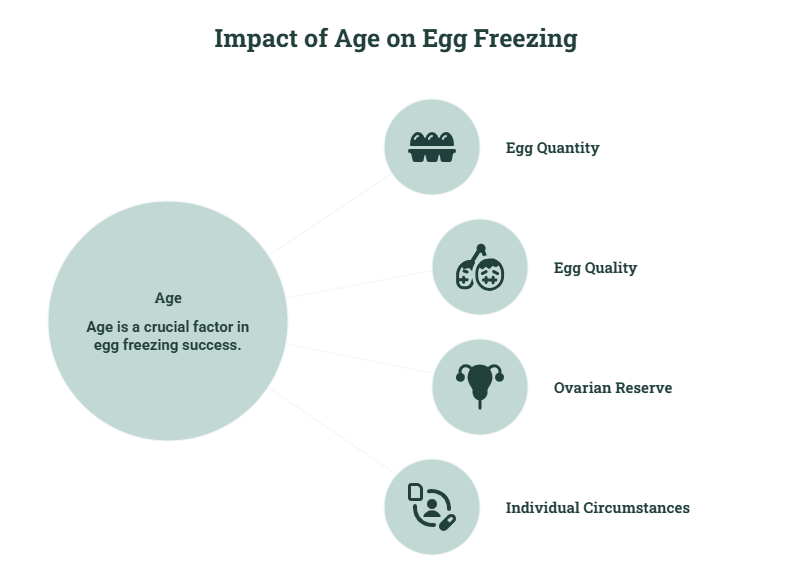
Age at egg freezing is one of the most important factors to consider.
Both egg quantity and egg quality generally decline with age. Evidence from the American Society for Reproductive Medicine indicates that outcomes tend to be better when oocyte cryopreservation is performed at a younger age.
However, there is no single “perfect age” that applies to everyone. For more detailed guidance on timing, read about when to freeze eggs based on age and ovarian reserve, including how age interacts with future reproductive plans.
Your fertility specialist may consider:
- Age
- Ovarian reserve
- Antral follicle count
- Medical and reproductive history
- Previous ovarian surgery or treatment
- Future reproductive plans
The goal is to assess your individual circumstances rather than rely on one age cutoff. Ovarian reserve can be assessed through AMH testing and antral follicle count, which help inform how many eggs you might retrieve in one cycle. Learn more about the difference between AFC vs AMH and how both tests are used to assess ovarian reserve before egg freezing.
How Should You Prepare for Egg Freezing?
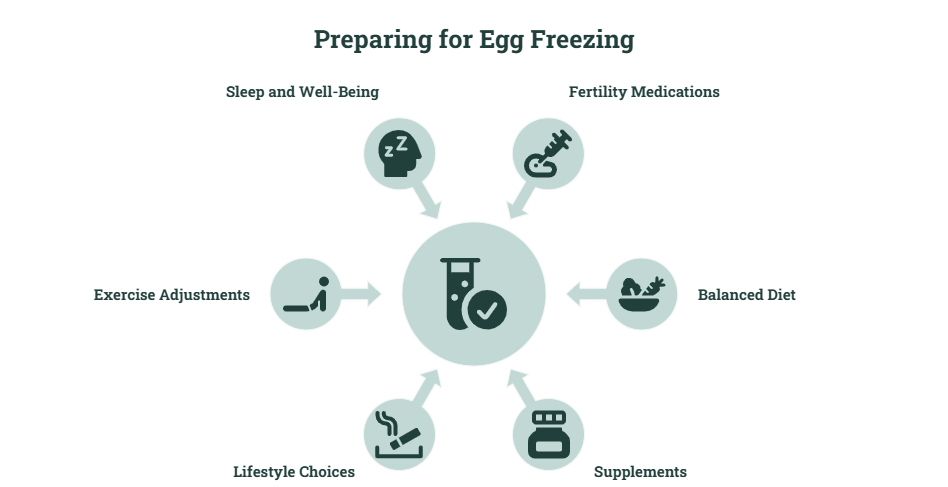
To prepare for egg freezing, follow your fertility specialist’s medication schedule, attend all monitoring appointments, maintain healthy lifestyle habits, and carefully follow your clinic’s instructions before egg retrieval.
Preparation usually begins several weeks before retrieval and may include ovarian stimulation, ultrasound monitoring, medication management, and retrieval-day planning. Recommendations can vary based on your age, ovarian reserve, medical history, and treatment protocol.
1. Take Fertility Medications as Prescribed
During ovarian stimulation, fertility medications help multiple follicles develop. Take all medications exactly as instructed and do not change the dose or timing without consulting your medical team.
Your monitoring results and trigger injection help determine the timing of egg retrieval. If you miss a dose or make a medication error, contact your clinic promptly.
2. Maintain a Balanced Diet
There is no specific food proven to improve egg quality. Instead, focus on a balanced diet that includes lean protein, fruits, vegetables, whole grains, healthy fats, and adequate hydration.
3. Discuss Supplements with Your Doctor
Some patients may be advised to take supplements such as folic acid or vitamin D. However, supplements should not be viewed as a guaranteed way to improve egg quality.
As part of comprehensive fertility counseling and planning, discuss all vitamins, supplements, and medications with your fertility specialist before treatment.
4. Avoid Smoking and Follow Alcohol Guidance
Smoking can negatively affect reproductive health. Your fertility specialist may also recommend avoiding alcohol during treatment. Follow your clinic’s guidance based on your individual treatment plan.
5. Modify Exercise When Needed
As the ovaries enlarge during stimulation, strenuous or high-impact exercise may need to be limited. Ask your fertility team which activities are appropriate during your cycle.
6. Prioritize Rest and Well-Being
Adequate sleep, regular routines, and stress-management strategies can support overall well-being during treatment. While reducing stress does not guarantee improved outcomes, many patients find that rest, relaxation, and good self-care make the process easier to manage.
Egg Freezing Preparation Timeline
Understanding what happens before retrieval can help patients feel more prepared throughout the process.
Several Weeks Before Treatment
- Initial consultation
- Fertility assessment
- Hormone testing
- Ultrasound evaluation
- Treatment planning
During Ovarian Stimulation
- Daily fertility medications
- Monitoring appointments
- Ultrasound scans
- Hormone assessments when indicated
36 Hours Before Retrieval
- Trigger injection administered at the prescribed time
- Final preparation instructions from the clinic
Retrieval Day
- Follow fasting instructions if required
- Arrive at the clinic at the scheduled time
- Undergo egg retrieval
- Recover according to medical instructions
Because every protocol differs, patients should always follow the timeline provided by their fertility clinic.
What Should You Do the Day Before Egg Retrieval?
Your fertility clinic will provide specific instructions for the day before retrieval.
These may include:
- Taking medications at precisely the instructed times
- Taking the trigger injection at the scheduled time
- Avoiding strenuous exercise
- Following food and fluid instructions
- Confirming your arrival time
- Arranging transportation home if sedation is planned
- Asking about medications you normally take
Why Is the Trigger Injection So Important?
The trigger injection helps the eggs complete their final maturation before retrieval.
Egg retrieval is commonly scheduled approximately 34–36 hours after the trigger, depending on the treatment protocol.
Do not change the trigger timing yourself.
If you are unsure when or how to administer the trigger injection, contact your clinic immediately.
What Should You Do on Egg Retrieval Day?
Before leaving home, follow your fertility center’s instructions.
Depending on the sedation or anesthesia used, you may be instructed to:
- Fast for a specified period
- Avoid drinking for a specified period
- Shower and maintain appropriate hygiene
- Avoid makeup or other products
- Remove contact lenses
- Remove nail polish if requested
- Wear comfortable clothing
- Bring required identification and medical information
- Arrive at the scheduled time
- Have an accompanying adult if required
Do You Need to Fast Before Egg Retrieval?
Often, yes, when sedation or anesthesia is planned.
Fasting requirements are generally related to the sedation or anesthesia rather than the eggs themselves.
The exact fasting period can vary according to the anesthesia protocol and clinic instructions.
Always follow the fasting instructions provided by your fertility center rather than using a generic fasting rule.
What Happens During Egg Retrieval?
Egg retrieval is a minimally invasive procedure performed under appropriate medical supervision.
At GFC, the medical team prepares the patient and monitors vital signs before the procedure. Sedation or anesthesia may be administered according to the treatment plan.
The doctor uses ultrasound guidance to identify the ovarian follicles and a fine needle to retrieve the eggs through the vagina.
The retrieval procedure itself commonly takes around 15–20 minutes, although the total time at the clinic will be longer because of preparation and recovery.
After retrieval, the embryology laboratory assesses the eggs and identifies those that are mature and suitable for vitrification.
What Happens to the Eggs After Retrieval?
Mature eggs suitable for freezing are preserved using vitrification, a rapid freezing technique designed to minimize damaging ice-crystal formation.
The eggs are then stored in liquid nitrogen at approximately −196°C. Read about GFC’s advanced laboratory technology and AI embryo assessment, including vitrification systems and controlled laboratory environments.
Vitrification is an established method of oocyte cryopreservation and is widely used in fertility preservation. Learn more about high ICSI success rates through laboratory excellence, including embryologist expertise, quality-control systems, and advanced culture conditions.
How Many Eggs Should You Freeze?
There is no single number of eggs that guarantees a future baby.
The number of eggs that may be appropriate depends on factors such as:
- Age when the eggs are frozen
- Number of mature eggs retrieved
- Egg quality
Individual fertility factors - Future treatment circumstances
ASRM states that there is insufficient evidence to recommend one absolute number of oocytes that guarantees a reasonable probability of live birth after planned egg freezing.
Your fertility specialist can assess your age, ovarian reserve, and response to stimulation to determine whether one or more retrieval cycles may be appropriate. For patients planning future use of frozen eggs, review the complete ICSI cost breakdown for first-time patients, which covers fertilization, embryo culture, and transfer when you are ready to use your frozen eggs.
How Long Can Frozen Eggs Be Stored?
Frozen eggs are stored under controlled cryogenic conditions.
The permitted storage period and requirements depend on applicable regulations, clinic policies, and the patient’s treatment circumstances.
Importantly, storing eggs does not mean they continue to age in the same way eggs remaining in the ovaries do. The age at which the eggs were frozen remains an important factor when considering future outcomes.
Ask your clinic about:
- Storage period
- Annual storage fees
- Consent requirements
- Future use of the eggs
- Procedures for transfer or transport
For patients planning ahead, review the complete egg freezing cost breakdown, which covers retrieval, vitrification, storage fees, and future treatment costs when you are ready to use your frozen eggs.
What Happens When You Are Ready to Use Frozen Eggs?
When you decide to use your frozen eggs, the process typically involves:
- Medical assessment and treatment planning
- Thawing the cryopreserved eggs
- Assessing which eggs survive warming
- Fertilizing suitable eggs, commonly using ICSI
- Culturing the resulting embryos
- Considering genetic testing when medically appropriate
- Preparing for embryo transfer
Egg freezing preserves an option for future fertility treatment. It does not guarantee pregnancy or live birth. Learn more about PGT-A genetic screening to detect chromosomal abnormalities in embryos, including what the test evaluates and when it may be recommended.
Future outcomes depend on multiple factors, including:
- Age when the eggs were frozen
- Number of mature eggs stored
- Egg survival after warming
- Fertilization
- Embryo development
- Uterine and reproductive factors
- Overall health at the time of treatment
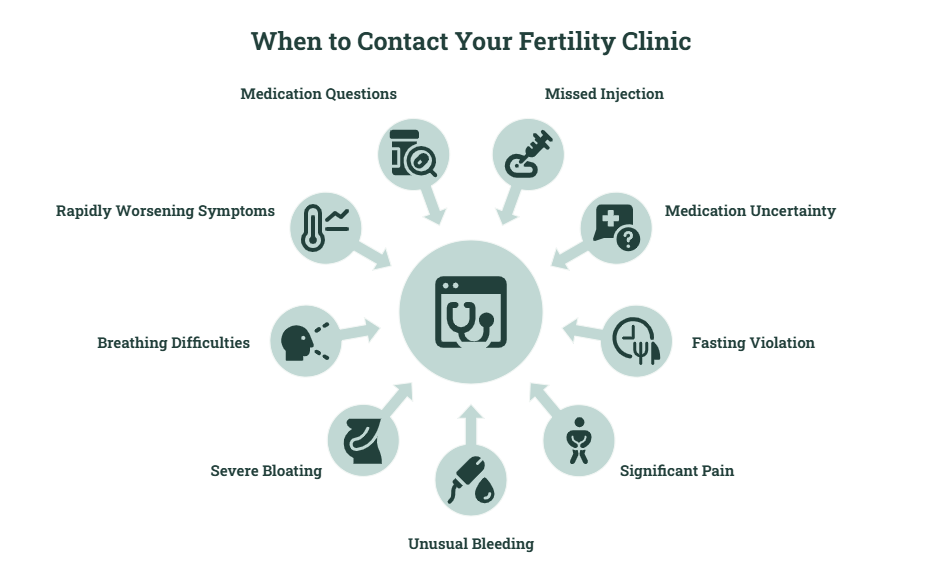
When Should You Contact Your Fertility Clinic?
Contact your fertility team if:
- You miss or mistime an injection.
- You are unsure how to administer a medication.
- You accidentally eat or drink during the fasting period.
- You develop significant pain.
- You experience unusual bleeding.
- You develop severe bloating or breathing difficulties.
- Your symptoms are rapidly worsening.
- You have questions about medications or supplements.
Do not wait until your retrieval appointment if you are uncertain about an important treatment instruction.
Frequently Asked Questions
Can I Work During an Egg Freezing Cycle?
Many patients continue working during ovarian stimulation and monitoring appointments.
However, schedules may need to be adjusted to accommodate clinic visits. Some patients also experience bloating, fatigue, or mild discomfort during stimulation. Your fertility specialist can advise whether any work-related modifications are appropriate.
Can I Travel During Egg Freezing Treatment?
Travel may be possible during the early stages of treatment, but frequent monitoring appointments are usually required during ovarian stimulation.
Patients should discuss any planned travel with their fertility specialist before beginning treatment because missing monitoring appointments could affect cycle management.
Can I Have Sex During Ovarian Stimulation?
Recommendations regarding sexual activity vary between patients and treatment protocols.
As the ovaries enlarge during stimulation, some fertility specialists may recommend avoiding intercourse during later stages of treatment. Follow your clinic’s specific guidance.
What Medications Should I Stop Before Egg Freezing?
Patients should never stop prescription medications without medical guidance.
Before treatment begins, inform your fertility specialist about all medications, vitamins, supplements, herbal products, and over-the-counter medications you take. Your healthcare team can advise whether any changes are necessary.
How Painful Is Egg Retrieval?
Egg retrieval is typically performed using sedation or anesthesia.
Most patients do not feel pain during the procedure itself. Mild cramping, bloating, pelvic discomfort, or spotting may occur afterward and generally improve within several days.
Recovery experiences vary between individuals.
What Should I Wear on Egg Retrieval Day?
Wear loose, comfortable clothing that is easy to change into and out of after the procedure.
Avoid jewelry, perfumes, heavy makeup, or other items if your clinic advises against them. Follow the specific instructions provided by your treatment team.
Can I Drive After Egg Retrieval?
Patients who receive sedation or anesthesia are generally advised not to drive after the procedure.
Most clinics require patients to arrange transportation home and may require a responsible adult to accompany them following retrieval.
How Many Eggs Should Be Frozen?
The number of eggs recommended for freezing varies based on age, ovarian reserve, reproductive goals, and the expected number of mature eggs retrieved during treatment.
Your fertility specialist can discuss how many eggs may be appropriate based on your individual circumstances and future family-building plans.
Why Choose Genesis Fertility Center (GFC)?

Every fertility journey is unique, and choosing the right fertility clinic is an important step toward building your family. At Genesis Fertility Center (GFC), our experienced team of reproductive specialists provides personalized treatment plans using advanced Assisted Reproductive Technology (ART), including IVF, ICSI, Egg Freezing, Embryo Freezing, and PGT-A genetic testing by NGS. We combine advanced laboratory technology with treatment protocols to deliver care tailored to your individual fertility needs.
Our fertility team of obstetricians, gynecologists, fertility specialists, and embryologists is committed to providing compassionate care, clear communication, and transparent pricing throughout every stage of your fertility journey.
To learn more or schedule a consultation, please contact Genesis Fertility Center (GFC).
Call Center: 097-484-5335
Medical Disclaimer
This article is for general information and does not replace a personal medical consultation. Individual results vary; your fertility specialist will advise on what is appropriate for your situation.