Considering ICSI and IVF treatment in Thailand? This guide explains the difference between IVF and ICSI, who may benefit, how treatment works, expected timelines, success factors, costs, PGT-A, embryo transfer, and what international patients should know before traveling for fertility treatment.
Quick Answer
IVF (in vitro fertilization) is an assisted reproductive treatment in which eggs are retrieved and fertilized with sperm in a laboratory. ICSI (intracytoplasmic sperm injection) is a specialized fertilization technique performed during an IVF cycle, where a single sperm is injected directly into a mature egg. ICSI may be particularly useful for certain cases of male-factor infertility or previous fertilization problems, but it is not automatically more effective than conventional IVF for every patient.
The appropriate treatment depends on factors such as age, ovarian reserve, egg and sperm quality, medical history, previous fertility treatment, and reproductive goals. A fertility specialist should assess both partners before recommending a treatment plan.
What Is IVF?
In vitro fertilization (IVF) involves stimulating the ovaries to develop multiple follicles, retrieving eggs, and fertilizing them with sperm in a laboratory, as summarized in ASRM/ReproductiveFacts.org’s patient fact sheet on IVF.
A typical IVF cycle may include:
- Fertility consultation and assessment
- Ovarian stimulation
- Ultrasound and hormone monitoring
- Egg retrieval
- Sperm collection and preparation
- Fertilization using conventional IVF or ICSI
- Embryo culture
- Embryo transfer or freezing
- Pregnancy testing and follow-up
The exact protocol is individualized according to the patient’s medical history and treatment goals.
What Is ICSI?
ICSI (intracytoplasmic sperm injection) is a laboratory fertilization technique performed during an IVF cycle.
With conventional IVF, prepared sperm and eggs are placed together in a laboratory dish, allowing fertilization to occur naturally.
With ICSI, an embryologist selects a single sperm and injects it directly into a mature egg using specialized equipment.
The ovarian stimulation and egg retrieval stages are generally similar. The main difference is how fertilization takes place in the laboratory.
What Is the Difference Between IVF and ICSI?
| Conventional IVF | ICSI |
|---|---|
| Eggs and prepared sperm are placed together in a laboratory dish | A single sperm is injected directly into a mature egg |
| Fertilization occurs without direct sperm injection | The embryologist assists the sperm-entry step |
| May be appropriate when sperm parameters are adequate | Often considered for significant sperm-related problems |
| Does not require sperm injection | Requires specialized micromanipulation |
ICSI is not simply an alternative to IVF. It is a fertilization technique that may be used as part of an IVF cycle.
The decision between conventional IVF and ICSI should be based on the patient’s individual circumstances and the recommendation of the fertility specialist.
Is ICSI Better Than IVF?
Not necessarily.
ICSI can be valuable for selected patients, particularly when there is significant male-factor infertility or previous fertilization failure. However, it does not automatically improve pregnancy or live-birth outcomes for every IVF patient.
ICSI may be considered when:
- Sperm count is very low
- Sperm motility is significantly reduced
- Sperm morphology is severely abnormal
- Surgically retrieved sperm is required
- Previous IVF resulted in poor or failed fertilization
- The fertility team identifies another specific indication
For patients without a clear indication for ICSI, conventional IVF may be an appropriate option.
Who May Benefit From IVF or ICSI?
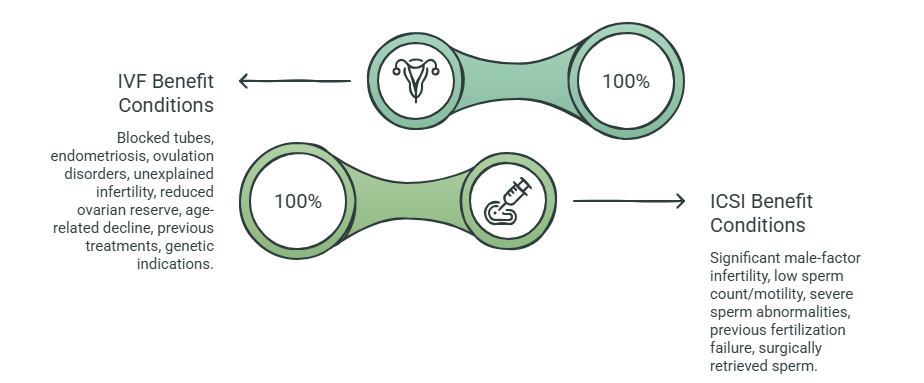
IVF may be considered for conditions including:
- Blocked or damaged fallopian tubes
- Endometriosis
- Ovulation disorders
- Unexplained infertility
- Reduced ovarian reserve
- Age-related fertility decline
- Previous unsuccessful fertility treatments
- Certain reproductive or genetic indications
ICSI may be considered for:
- Significant male-factor infertility
- Very low sperm count or motility
- Severe sperm abnormalities
- Previous fertilization failure
- Surgically retrieved sperm
Not everyone experiencing infertility needs IVF or ICSI. A fertility evaluation of both partners helps determine the most appropriate treatment.
What Are the Steps of IVF and ICSI Treatment?
1. Consultation and Fertility Assessment
The fertility team reviews medical and reproductive history and may recommend ultrasound, ovarian reserve testing, hormone testing, semen analysis, uterine assessment, or other investigations.
2. Ovarian Stimulation
Fertility medication stimulates the ovaries to develop multiple follicles. Treatment commonly lasts around 8–14 days, with ultrasound and hormone monitoring used to assess the response.
3. Egg Retrieval
When the follicles are ready, medication triggers final egg maturation. Eggs are then collected using transvaginal ultrasound guidance, usually with sedation or anesthesia according to the clinic’s protocol.
4. Fertilization
Eggs may be fertilized using conventional IVF or ICSI, depending on the treatment plan.
5. Embryo Culture
Embryos are monitored in the laboratory, often for approximately 5–6 days, allowing suitable embryos to potentially develop to the blastocyst stage.
6. Embryo Transfer or Freezing
A suitable embryo may be transferred to the uterus or frozen for future use via frozen embryo transfer (FET). PGT-A may be considered in selected cases before transfer.
7. Pregnancy Testing
A blood beta-hCG test is performed after embryo transfer at the time recommended by the fertility clinic.
How Long Does IVF or ICSI Take?
The stimulation and egg retrieval phase often takes approximately 2–3 weeks.
The complete journey may take longer if the patient requires:
- Embryo freezing
- PGT-A
- Frozen embryo transfer
- Treatment of an underlying medical condition
- More than one treatment cycle
Each patient should receive an individualized timeline from the treating clinic.
How Long Do International Patients Need to Stay in Thailand?
International patients need to coordinate travel around time-sensitive procedures.
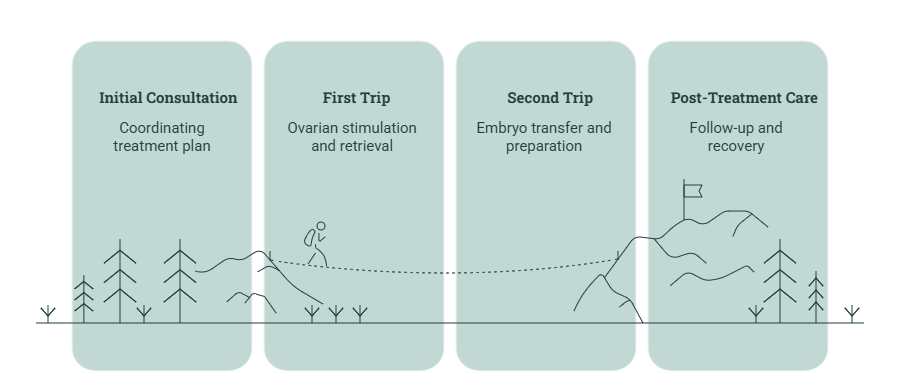
Depending on the treatment plan, some patients may be able to divide treatment into two trips:
First trip: Ovarian stimulation and monitoring are completed according to the treatment protocol, followed by travel to Thailand for final monitoring and egg retrieval.
Second trip: If embryos are frozen, the patient may return later for preparation and frozen embryo transfer.
This approach may reduce the length of each individual stay, but it is not suitable for every patient. The number and timing of trips depend on the patient’s medical situation, treatment protocol, monitoring arrangements, and whether additional procedures are required.
Before traveling, international patients should ask:
- Can the initial consultation be completed online?
- Can some tests and monitoring be performed in my home country?
- How long should I stay in Thailand?
- Will I need one trip or two?
- When should I arrive for egg retrieval?
- When will embryo transfer take place?
- What happens if the treatment schedule changes?
- What follow-up care is available after I return home?
What Is the IVF and ICSI Success Rate?
There is no single success rate that applies to every IVF or ICSI patient.
Outcomes can be influenced by:
- Female age
- Ovarian reserve
- Egg quality
- Sperm quality
- Number of eggs retrieved
- Embryo development
- Embryo chromosomal status
- Uterine and endometrial factors
- Previous fertility treatment
- Laboratory quality
It is also important to understand how a clinic defines “success.” Results may be reported as fertilization, clinical pregnancy, implantation, ongoing pregnancy, or live birth rates.
When comparing clinics, ask whether results are reported per cycle, per embryo transfer, or per patient, and whether data are broken down by age.
A fertility clinic should present outcome data transparently rather than using one percentage as a guarantee.
How Much Does IVF or ICSI Cost in Thailand?
The cost varies according to the clinic, treatment protocol, medications, laboratory procedures, and additional services. If you are comparing treatment options and want to review current package information, see our ICSI Price Packages in Thailand for 2026.
Potential costs may include:
- Consultation and fertility testing
- Fertility medication
- Ultrasound monitoring
- Egg retrieval
- Sedation or anesthesia
- IVF or ICSI fertilization
- Embryo culture
- Embryo freezing and storage
- Frozen embryo transfer
- PGT-A or other genetic testing
- Additional sperm procedures
International patients should also consider travel, accommodation, transportation, and possible additional clinic visits.
Before choosing a package, ask for a written breakdown of what is included and excluded. Current prices should always be confirmed directly with the clinic.
What Is PGT-A?
PGT-A (preimplantation genetic testing for aneuploidy) is a laboratory test that examines embryo cells for certain chromosome-number abnormalities before embryo transfer. Learn more about GFC’s PGT-A/NGS embryo testing service.
PGT-A may be considered in selected circumstances, depending on factors such as age, reproductive history, and embryo availability.
However, PGT-A does not guarantee pregnancy or a healthy baby and does not replace prenatal testing, consistent with ASRM’s 2024 committee opinion on preimplantation genetic testing for aneuploidy. Patients should discuss potential benefits, limitations, risks, and costs with their fertility specialist.
How Should You Choose an IVF Clinic in Thailand?
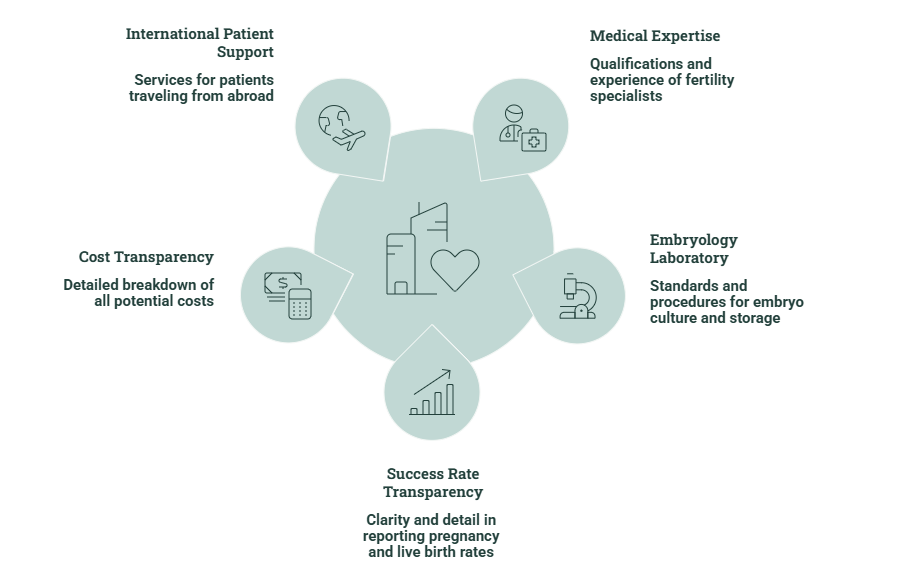
When comparing fertility clinics, consider:
Medical expertise
Ask about the qualifications and experience of the fertility specialists managing treatment.
Embryology laboratory
Ask about laboratory standards, embryo culture, cryopreservation, and quality-control procedures.
Success-rate transparency
Check whether results are reported by age and whether they refer to pregnancy or live birth.
Cost transparency
Request a detailed breakdown of medications, laboratory procedures, embryo freezing, storage, genetic testing, and other potential costs.
International-patient support
Ask about online consultations, medical-record review, remote monitoring, travel coordination, language support, and follow-up after returning home.
Frequently Asked Questions
Is ICSI the same as IVF?
No. IVF is the broader fertility treatment process. ICSI is a specialized fertilization technique that can be performed during an IVF cycle.
Is ICSI more successful than IVF?
Not necessarily. ICSI may improve fertilization in selected cases, particularly with significant male-factor infertility or previous fertilization problems, but it does not guarantee a higher live-birth rate for every patient.
How long does IVF take?
The stimulation and egg retrieval phase often takes around 2–3 weeks, but the complete treatment journey may take longer if embryos are frozen, PGT-A is performed, or a frozen embryo transfer is planned.
Can IVF or ICSI guarantee a baby?
No. Neither treatment guarantees pregnancy or live birth.
How many embryos are transferred?
The number depends on factors such as age, embryo quality, medical history, and applicable regulations. Single embryo transfer may be recommended in appropriate circumstances to reduce the risk of multiple pregnancy.
Can international patients freeze embryos and return later?
In appropriate circumstances, embryos can be cryopreserved for a later frozen embryo transfer. The timing depends on the patient’s medical situation and treatment plan.
Why Choose Genesis Fertility Center (GFC)?

Every fertility journey is unique, and choosing the right fertility clinic is an important step toward building your family. At Genesis Fertility Center (GFC), our experienced team of reproductive specialists provides personalized treatment plans using advanced Assisted Reproductive Technology (ART), including IVF, ICSI, Egg Freezing, Embryo Freezing, and PGT-A. We combine advanced laboratory technology with evidence-based treatment protocols to deliver care tailored to your individual fertility needs.
Our multidisciplinary team of obstetricians, gynecologists, fertility specialists, and embryologists is committed to providing compassionate care, clear communication, and transparent pricing throughout every stage of your fertility journey.
To learn more or schedule a consultation, please contact Genesis Fertility Center (GFC).
Call Center: 097-484-5335
Clinic Hours
- Monday – Friday: 9:00 AM – 8:00 PM
- Saturday – Sunday: 8:00 AM – 8:00 PM