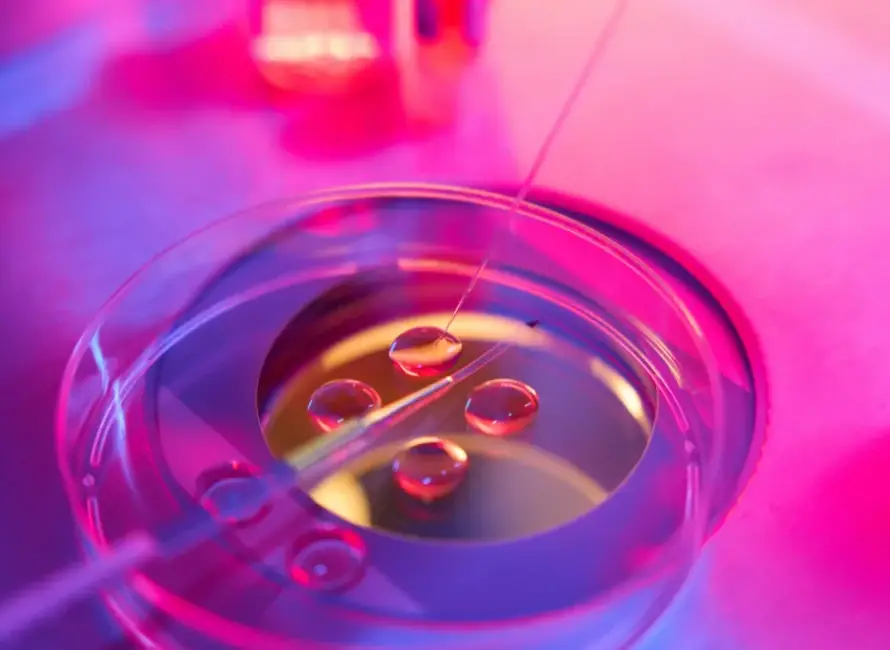
Embryo Glue is not literal glue. It is a specialised embryo-transfer medium containing a relatively high concentration of hyaluronic acid (hyaluronan), a substance naturally found in the reproductive tract.
It is used during embryo transfer in IVF and ICSI to provide a hyaluronic-acid-enriched environment that may support interactions between the embryo and the uterine lining.
Research suggests that high-concentration hyaluronic acid transfer media may improve clinical pregnancy and live birth rates compared with transfer media containing little or no hyaluronic acid. However, Embryo Glue does not guarantee implantation or pregnancy.
Whether it is worth considering depends on factors such as:
- Embryo quality and developmental stage
- Chromosomal status
- Maternal age
- Endometrial receptivity
- Uterine factors
- Previous IVF outcomes
- The overall treatment plan
- The cost and evidence for the add-on
At Genesis Fertility Center (GFC), the decision to use an embryo-transfer add-on should be considered in the context of the patient’s individual IVF or ICSI treatment. Learn more about IVF and ICSI treatment options, including stimulation protocols, embryo culture, and transfer procedures.
What Is Embryo Glue?
Embryo Glue is a specialised embryo-transfer medium used during IVF and ICSI. Despite its name, it does not physically glue an embryo to the uterus.
Instead, the medium contains a relatively high concentration of hyaluronic acid, which naturally occurs in the female reproductive tract. During embryo transfer, the embryo is placed in the specialised medium before being transferred into the uterus.
For a comprehensive overview of IVF and ICSI, read the complete guide to ICSI and IVF fertility treatment steps, which explains stimulation, retrieval, fertilisation, and embryo transfer.
Embryo Glue changes the transfer medium. It does not physically attach the embryo to the uterine wall.
The term “Embryo Glue” is therefore a simplified name for a particular type of embryo-transfer medium rather than a literal adhesive.
How Does Embryo Glue Work?
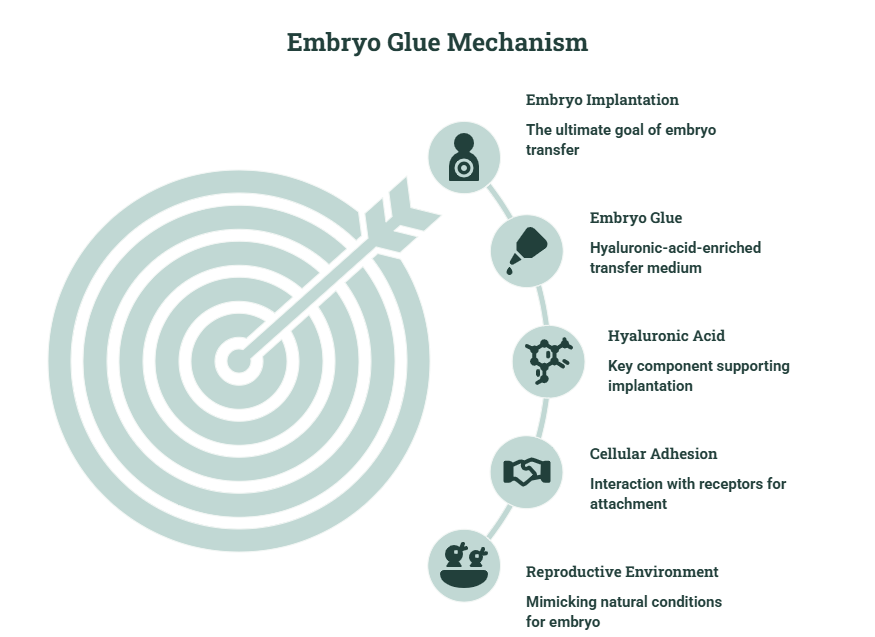
Embryo Glue provides a hyaluronic-acid-enriched transfer environment that may support biological interactions involved in embryo implantation.
Embryo implantation is a complex process involving the embryo and the endometrium, or uterine lining. Hyaluronic acid increases the viscosity of the transfer medium and has been studied for its potential role in cellular interactions and adhesion.
Researchers have proposed several possible mechanisms:
- Supporting embryo–endometrium interaction: Hyaluronic acid is naturally involved in cellular interactions within the reproductive tract.
- Increasing transfer-medium viscosity: The physical properties of the medium may support the embryo during transfer.
- Supporting cellular adhesion: Hyaluronic acid can interact with receptors involved in cell adhesion.
- Mimicking aspects of the reproductive environment: The medium is designed to reproduce some characteristics of the environment surrounding an embryo near implantation.
These mechanisms help explain why hyaluronic-acid-enriched transfer media have been studied as an IVF add-on. They should not, however, be interpreted as proof that the medium can overcome major biological factors affecting IVF outcomes.
For example, Embryo Glue cannot correct chromosomal abnormalities in an embryo or resolve every uterine or endometrial problem.
Does Embryo Glue Improve IVF Success Rates?
Evidence suggests that high-concentration hyaluronic acid transfer media probably increase clinical pregnancy and live birth rates compared with media containing little or no hyaluronic acid.
A Cochrane systematic review evaluated 26 randomised studies involving 6,704 women undergoing assisted reproduction.
Compared with transfer media containing no or low concentrations of hyaluronic acid, high-concentration hyaluronic acid media probably increased live birth and clinical pregnancy rates.
What Do the Live Birth Numbers Mean?
The Cochrane review found that high-concentration hyaluronic acid transfer media probably increase live birth rates.
In the studies reviewed, when the estimated chance of live birth with no or low hyaluronic acid was approximately 33%, the estimated chance with high-concentration hyaluronic acid was approximately 37% to 44%.
These figures are results from clinical studies. They should not be interpreted as an individual’s personal chance of success.
For context on how GFC presents and explains its reported outcomes, read the clinic’s guide to understanding IVF success rates in Thailand.
When comparing IVF success figures, patients should check whether the figures relate to similar patient groups, embryo types and outcome definitions. Your own probability depends on factors including age, embryo characteristics, diagnosis, treatment history and the clinic’s treatment protocol.
What About Clinical Pregnancy Rates?
The same evidence suggests that high-concentration hyaluronic acid transfer media probably increase clinical pregnancy rates compared with media containing little or no hyaluronic acid.
That does not mean every patient will experience the same benefit.
Embryo quality, chromosomal status, maternal age, uterine conditions, endometrial development and treatment timing can all affect the outcome.
For patients considering genetic testing, read the guide to PGT-A embryo screening for chromosomal abnormalities, which explains how embryo genetics may affect implantation and pregnancy outcomes.
Does Embryo Glue Improve Implantation?
Embryo Glue may improve implantation-related outcomes, but the strongest outcome measures discussed in the available evidence are clinical pregnancy and live birth.
Implantation is influenced by multiple biological factors, including:
- The embryo
- Embryo development
- Chromosomal status
- The endometrium
- Hormonal conditions
- Uterine factors
- Timing between embryo and endometrial development
This is why it is more accurate to describe Embryo Glue as a potentially beneficial embryo-transfer add-on rather than a treatment that guarantees implantation.
A transfer medium can form part of the overall embryo-transfer strategy, but it cannot remove the other biological factors that influence whether an embryo implants and develops into a pregnancy.
Can Embryo Glue Be Used During Frozen Embryo Transfer?
Yes, hyaluronic-acid-enriched transfer media can be used during frozen embryo transfer, depending on the clinic’s protocol and the patient’s circumstances.
During a frozen embryo transfer, a previously frozen and thawed embryo is transferred into the uterus. The use of an enriched transfer medium is an additional decision made as part of the treatment plan.
Learn more about the frozen embryo transfer procedure, including endometrial preparation, timing and laboratory protocols.
A fertility specialist can determine whether the approach is appropriate for a particular frozen embryo transfer cycle.
Is Embryo Glue an IVF Add-On?
Yes. Embryo Glue is generally considered an add-on to embryo transfer rather than a replacement for established IVF procedures.
This distinction matters because an add-on should be considered in terms of:
- The available evidence
- Potential benefits
- Limitations
- Cost
- Alternatives
- Relevance to the individual patient
Patients evaluating optional procedures can also review SART’s guide to IVF add-ons to understand how fertility add-ons are evaluated and whether a particular procedure is likely to provide meaningful value.
Who May Consider Embryo Glue?
There is no single patient group for whom Embryo Glue is guaranteed to work.
A fertility specialist may discuss it with patients who:
- Are undergoing IVF or ICSI
- Are preparing for embryo transfer
- Are undergoing frozen embryo transfer
- Want to understand available embryo-transfer add-ons
- Are considering additional strategies that may potentially improve IVF outcomes
Patients who have experienced unsuccessful embryo transfers may also want to discuss available options with their fertility specialist. However, previous unsuccessful transfers do not by themselves establish that Embryo Glue will address the underlying cause.
The decision should consider:
- Age
- Embryo quality
- Embryo chromosomal status
- Endometrial development
- Uterine anatomy
- Hormonal conditions
- Previous treatment history
- Overall IVF strategy
- Cost and alternatives
Patients who are unsure which add-ons or treatments may be appropriate can begin with fertility counseling and treatment planning. A consultation can help review embryo quality, previous outcomes and individual fertility goals.
What Happens During Embryo Transfer With Embryo Glue?
Embryo transfer with a hyaluronic-acid-enriched medium follows the basic embryo-transfer process, with the embryo placed in the specialised medium before transfer.
The exact laboratory protocol can vary between fertility centres and products. The ESHRE guideline on embryo transfer best practices provides recommendations concerning embryo-transfer practice, including catheter selection, ultrasound guidance and transfer-medium considerations.
The general process is:
- Embryo selection – The embryology team identifies the embryo selected for transfer according to the treatment plan.
- Transfer-medium preparation – The embryo is placed in a hyaluronic-acid-enriched transfer medium.
- Embryo loading – The embryo and transfer medium are carefully loaded into the transfer catheter.
- Catheter placement – The fertility specialist guides the catheter through the cervix into the uterus, commonly with ultrasound guidance.
- Embryo transfer – The embryo is gently released into the uterine cavity.
- Catheter removal – The catheter is removed and checked according to the clinic’s standard procedure.
The embryo must then continue the biological process of implantation.
Learn more about why GFC achieves high ICSI success rates through laboratory excellence, including embryologist expertise, quality-control systems and controlled culture conditions.
Embryo Glue does not physically hold the embryo in place.
What Happens After the Embryo Is Transferred?
Embryo transfer does not mean that implantation occurs immediately.
After transfer, the embryo must interact with the endometrium and progress through the biological stages required for implantation.
Successful implantation depends on factors including:
- Embryo developmental stage and quality
- Chromosomal status
- Endometrial receptivity
- Hormonal support
- Maternal age
- Uterine anatomy
- Synchronisation between embryo development and endometrial development
This is why the transfer medium is only one part of the overall IVF process.
Once pregnancy is confirmed, learn how to calculate IVF pregnancy age and due date accurately, which differs from natural conception dating.
What Are the Risks and Limitations of Embryo Glue?
The main limitation is that Embryo Glue cannot guarantee implantation or pregnancy and cannot correct the underlying biological factors responsible for every unsuccessful embryo transfer.
Important limitations include:
- It cannot correct chromosomal abnormalities in an embryo.
- It cannot guarantee implantation.
- It cannot eliminate the effects of age or embryo quality.
- It cannot correct every cause of infertility or implantation failure.
- Its potential benefit may differ between patient groups.
- The evidence for fertility-treatment add-ons should be interpreted carefully.
Patients should therefore consider the potential benefit relative to the additional cost and their individual treatment circumstances.
Review GFC’s current ICSI treatment pricing for package tiers, eligibility criteria, medication limits and optional add-ons including embryo-transfer media.
The goal is not simply to ask whether an add-on “works”.
The more useful question is whether its potential contribution is meaningful for your particular treatment plan.
Embryo Glue vs. Standard Embryo Transfer
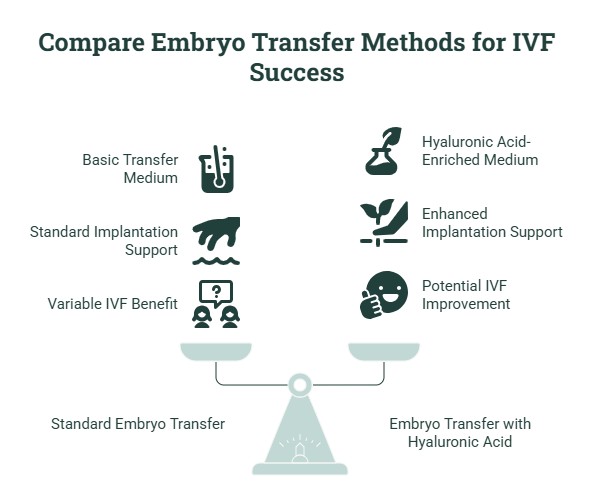
The basic embryo-transfer procedure is similar. The primary difference is the composition of the transfer medium.
| Feature | Standard Embryo Transfer | Embryo Transfer With Hyaluronic Acid-Enriched Medium |
|---|---|---|
| Embryo transferred into uterus | Yes | Yes |
| Transfer catheter used | Yes | No |
| High-concentration hyaluronic acid | No | Yes |
| Intended to support the implantation environment | Yes | Yes |
| Guarantees implantation | No | No |
| Potential IVF benefit | Depends on multiple factors | Evidence suggests potential improvement in clinical pregnancy and live birth |
The main difference is the composition of the transfer medium—not the basic embryo-transfer procedure.
Is Embryo Glue Worth Considering?
Embryo Glue may be worth discussing if you understand the evidence, limitations, cost and relevance to your individual embryo-transfer plan.
Current evidence indicates that high-concentration hyaluronic acid transfer media probably increase clinical pregnancy and live birth rates compared with low- or no-hyaluronic-acid media.
However, that does not mean every patient will benefit to the same extent.
Before deciding, consider:
- Your age
- Embryo quality and developmental stage
- Embryo chromosomal status, where known
- Endometrial and uterine factors
- Previous IVF outcomes
- Whether the transfer is fresh or frozen
- The evidence supporting the add-on
- The additional cost
- Other available treatment options
Patients should be wary of any explanation that presents Embryo Glue as a guarantee of implantation or pregnancy.
Before choosing a provider, use this guide on selecting an IVF clinic in Bangkok to evaluate factors including laboratory quality, specialist expertise, success-rate definitions, add-on availability and international patient support.
Frequently Asked Questions
What is Embryo Glue?
Embryo Glue is a specialised embryo-transfer medium containing a relatively high concentration of hyaluronic acid. It is used during IVF or ICSI embryo transfer and is intended to provide an environment that may support embryo–endometrium interaction.
Is Embryo Glue actually glue?
No. Embryo Glue is not a literal adhesive. The name refers to the proposed role of hyaluronic acid in supporting interactions involved in embryo implantation.
Does Embryo Glue increase IVF success rates?
It may. Evidence suggests that high-concentration hyaluronic acid transfer media probably increase clinical pregnancy and live birth rates compared with transfer media containing little or no hyaluronic acid. However, it does not guarantee IVF success.
Does Embryo Glue improve implantation?
It may improve implantation-related outcomes, but implantation depends on many biological factors. Current evidence supports potential improvements in clinical pregnancy and live birth, rather than a claim that Embryo Glue guarantees implantation.
Can Embryo Glue be used for frozen embryo transfer?
Yes, in appropriate cases. Hyaluronic-acid-enriched transfer media can be used during frozen embryo transfer depending on the clinic’s protocol and the patient’s treatment plan.
Is Embryo Glue suitable for everyone?
Not necessarily. A fertility specialist should consider the patient’s age, embryo quality, previous IVF history, uterine and endometrial factors and overall treatment plan.
Is Embryo Glue an IVF add-on?
Yes. It is generally considered an add-on to the embryo-transfer procedure rather than a separate fertility treatment.
Does Embryo Glue guarantee pregnancy?
No. Even when evidence suggests a potential improvement in clinical pregnancy or live birth outcomes, no embryo-transfer medium can guarantee implantation or pregnancy.
Why Choose Genesis Fertility Center (GFC)?

Every fertility journey is unique, and choosing the right fertility clinic is an important step toward building your family. At Genesis Fertility Center (GFC), our experienced team of reproductive specialists provides personalized treatment plans using advanced Assisted Reproductive Technology (ART), including IVF, ICSI, Egg Freezing, Embryo Freezing, and PGT-A genetic testing by NGS. We combine advanced laboratory technology with treatment protocols to deliver care tailored to your individual fertility needs.
Our fertility team of obstetricians, gynecologists, fertility specialists, and embryologists is committed to providing compassionate care, clear communication, and transparent pricing throughout every stage of your fertility journey.
To learn more or schedule a consultation, please contact Genesis Fertility Center (GFC).
Call Center: 097-484-5335
Medical Disclaimer
This article is for general information and does not replace a personal medical consultation. Individual results vary; your fertility specialist will advise on what is appropriate for your situation.